Two Compact SUVs with Different Strengths for Northwest Arkansas Drivers
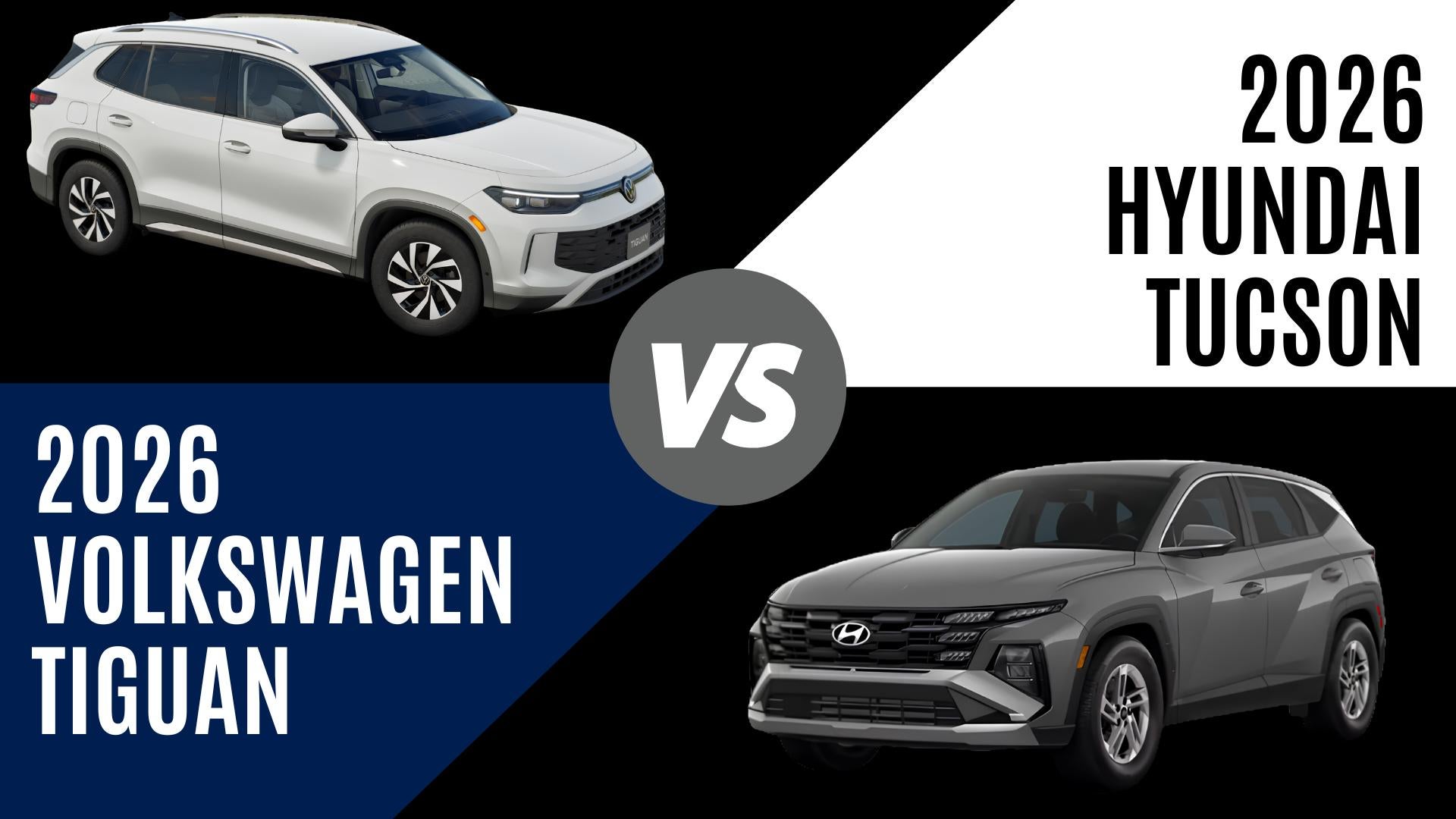
Shopping for a compact SUV often means comparing vehicles that appear similar on paper but deliver very different ownership experiences. The 2026 Volkswagen Tiguan and 2026 Hyundai Tucson are both designed to handle daily commuting, family transportation, and weekend travel, yet they approach performance, technology, and comfort from unique perspectives.
For drivers comparing the 2026 Volkswagen Tiguan vs 2026 Hyundai Tucson in Fayetteville, AR, both models offer available all-wheel drive, advanced safety technology, spacious interiors, and strong fuel economy. This comparison focuses on the gas-powered versions of both SUVs. Hyundai also offers a Tucson Hybrid for shoppers seeking additional efficiency, but the specifications discussed here apply to the standard gasoline-powered models.
Drivers interested in learning more about Volkswagen’s latest compact SUV can explore the current Tiguan lineup before visiting the dealership.
Vehicle Comparison
2026 Volkswagen Tiguan
- Available 15.0″ Touchscreen
- Massaging & Ventilated Front Seats
- Head-Up Display
2026 Hyundai Tucson
- Available Dual 12.3″ Displays
- Hyundai Digital Key
- Bose Premium Audio
European-Inspired Design Gives the Tiguan a Distinct Personality
Compact SUVs have become increasingly similar in appearance, making distinctive styling a valuable trait.
The 2026 Volkswagen Tiguan stands apart with a design that blends athletic proportions and upscale detailing. Volkswagen’s latest updates help give the Tiguan a more premium appearance while maintaining the clean, understated styling that has long defined the brand.
Inside, the Tiguan continues that theme with available leather upholstery, genuine wood accents, and a refined dashboard layout. The cabin feels thoughtfully designed, with attention paid to both aesthetics and functionality.
The Hyundai Tucson takes a more futuristic approach. Sharp body lines, a bold front fascia, and an available dual-screen dashboard create a modern atmosphere that appeals to technology-focused shoppers.
Design Highlights
- Tiguan: European-inspired styling and upscale interior materials
- Tucson: Bold exterior design and modern digital cockpit
- Both: Comfortable two-row SUVs with seating for five
Comparing Ride Quality and Everyday Performance
Performance differences begin to emerge once these SUVs leave the parking lot.
The Tiguan’s standard turbocharged engine produces 201 horsepower and pairs with an eight-speed automatic transmission. Volkswagen also reduced overall vehicle weight during its redesign, helping the SUV feel more responsive during acceleration and cornering. Drivers who enjoy a more engaging driving experience may appreciate the Tiguan’s steering feel and road manners.
For shoppers seeking even more performance, Volkswagen offers the new SEL R-Line Turbo trim with an impressive 268-horsepower version of the turbocharged engine.
The Tucson uses a naturally aspirated 187-horsepower four-cylinder engine paired with an eight-speed automatic transmission. While acceleration is more relaxed, Hyundai emphasizes ride comfort and refinement. The result is a quiet cabin and smooth highway cruising experience that many drivers will appreciate during longer trips.
Performance Takeaways
- Tiguan: 201-hp turbocharged engine and available 268-hp upgrade
- Tucson: Smooth ride and refined cruising manners
- Both: Available AWD and eight-speed automatic transmissions
Interior Comfort and Cargo Flexibility
Family-friendly versatility remains one of the biggest reasons shoppers choose compact SUVs.
The Tiguan benefits from increased cargo space and a redesigned interior that improves everyday usability. Volkswagen moved the gear selector to the steering column, creating additional center-console storage while helping the cabin feel more open.
Premium comfort features help separate the Tiguan from many competitors. Available massaging and ventilated front seats add a luxury touch that is uncommon in this segment, while a heated steering wheel and three-zone climate control further enhance comfort.
The Tucson counters with one of the roomiest cabins in its class. Rear-seat passengers enjoy generous accommodations, and the cargo area provides excellent practicality for groceries, sports equipment, luggage, and everyday errands.
Interior Comparison
- Tiguan: Available massaging seats and upscale interior appointments
- Tucson: Spacious rear seating and practical cargo area
- Both: Comfortable accommodations for families and commuters
Technology Showcases Two Different Approaches
Technology continues to play a major role in compact SUV purchasing decisions.
Volkswagen equips every Tiguan with a standard 12.9-inch touchscreen, while higher trims offer a massive available 15.0-inch display. The system runs Volkswagen’s latest Digital Cockpit Pro software and delivers a modern user experience. Drivers looking to maximize their ownership experience can learn more about Volkswagen’s infotainment capabilities.
Additional available features include a head-up display, wireless charging, and a premium Harman Kardon audio system.
Hyundai answers with a technology-rich cabin of its own. The Tucson offers an available dual-screen setup featuring two 12.3-inch displays housed beneath a single glass panel. Hyundai also offers Digital Key functionality, allowing compatible smartphones to access and operate the vehicle.
Both SUVs offer Apple CarPlay and Android Auto integration, helping drivers stay connected throughout their travels.
Technology Highlights
- Tiguan: Available 15.0-inch touchscreen, head-up display, Harman Kardon audio
- Tucson: Dual 12.3-inch displays and Hyundai Digital Key
- Both: Smartphone integration and modern connectivity features
Advanced Safety Technology Comes Standard
Modern SUV shoppers expect advanced driver-assistance features, and both vehicles deliver comprehensive safety packages.
Volkswagen equips the Tiguan with forward-collision warning, automatic emergency braking, blind-spot monitoring, lane-keeping assistance, and adaptive cruise control with lane-centering technology. Many of these systems fall under Volkswagen’s broader IQ.Drive safety suite, which helps support driver awareness during daily travel.
Hyundai also includes automated emergency braking, lane-keeping assistance, and available adaptive cruise control with lane-centering functionality. The Tucson continues Hyundai’s commitment to making advanced safety technology widely available across its lineup.
Safety Comparison
- Tiguan: Standard adaptive cruise control with lane centering
- Tucson: Comprehensive standard driver-assistance technologies
- Both: Advanced safety systems designed to support everyday driving
Fuel Economy, AWD Availability, and Towing Capability
Efficiency and capability often become deciding factors when comparing compact SUVs.
The gas-powered Tiguan achieves EPA ratings ranging from 25 to 29 MPG combined depending on trim and drivetrain configuration. Front-wheel-drive models can tow up to 1,500 pounds, while all-wheel-drive models increase capacity to 1,800 pounds. Drivers interested in learning more about Volkswagen’s AWD system can explore 4MOTION technology.
The Tucson delivers EPA-estimated combined fuel economy of 26-28 MPG and offers up to 2,000 pounds of towing capacity when properly equipped with a trailer hitch.
While fuel economy is competitive between the two models, the Tucson offers a slight towing advantage.
Capability Snapshot
- Tiguan: 25-29 MPG combined and up to 1,800 pounds of towing
- Tucson: 26-28 MPG combined and up to 2,000 pounds of towing
- Both: Available all-wheel drive
Warranty Coverage and Long-Term Ownership
Ownership costs extend beyond fuel economy and monthly payments.
The Tucson remains one of the segment leaders in warranty coverage. Hyundai provides a five-year/60,000-mile limited warranty, a 10-year/100,000-mile powertrain warranty, and three years of complimentary scheduled maintenance.
Volkswagen offers a four-year/50,000-mile limited warranty and powertrain warranty along with two years of complimentary scheduled maintenance. Drivers interested in understanding Volkswagen’s ownership protections can learn more about VW warranty coverage.
Both manufacturers provide valuable ownership benefits, though Hyundai’s warranty coverage remains among the most generous in the industry.
Ownership Value Overview
- Tiguan: Two years of complimentary maintenance
- Tucson: Longer warranty and maintenance coverage
- Both: Strong ownership support programs
Which Compact SUV Is Right for You?
The 2026 Volkswagen Tiguan and 2026 Hyundai Tucson both bring compelling strengths to the compact SUV segment.
Drivers who prioritize a more engaging driving experience, premium interior appointments, available massaging seats, and a larger available touchscreen may find the Tiguan especially appealing.
The Tucson, meanwhile, offers impressive warranty coverage, a spacious interior, strong technology features, and slightly greater towing capability.
For many Fayetteville-area shoppers, the decision may come down to which qualities matter most. The Tiguan delivers a distinctly European driving character and upscale features, while the Tucson focuses on practicality, value, and long-term ownership confidence.
The best way to determine which SUV fits your lifestyle is to experience them firsthand and compare the features that matter most to you.
Ready to explore the 2026 Volkswagen Tiguan? Visit Crain Volkswagen of Fayetteville to see available trims and features today.
FAQs
Which SUV offers more horsepower, the Volkswagen Tiguan or Hyundai Tucson?
The standard 2026 Volkswagen Tiguan produces 201 horsepower, while the 2026 Hyundai Tucson produces 187 horsepower.
Which SUV offers more towing capability?
The Hyundai Tucson can tow up to 2,000 pounds when properly equipped, while all-wheel-drive Tiguan models can tow up to 1,800 pounds.
Does either SUV offer premium comfort features?
Yes. The Volkswagen Tiguan offers available massaging and ventilated front seats, while the Hyundai Tucson offers a variety of premium comfort and technology features depending on trim level.
Refined Daily Driving or Rugged AWD Capability?
Choosing a small SUV often comes down to deciding what matters most during everyday driving. Some buyers prioritize comfort, cargo flexibility, and modern technology, while others care more about standard all-wheel drive and light off-road capability.
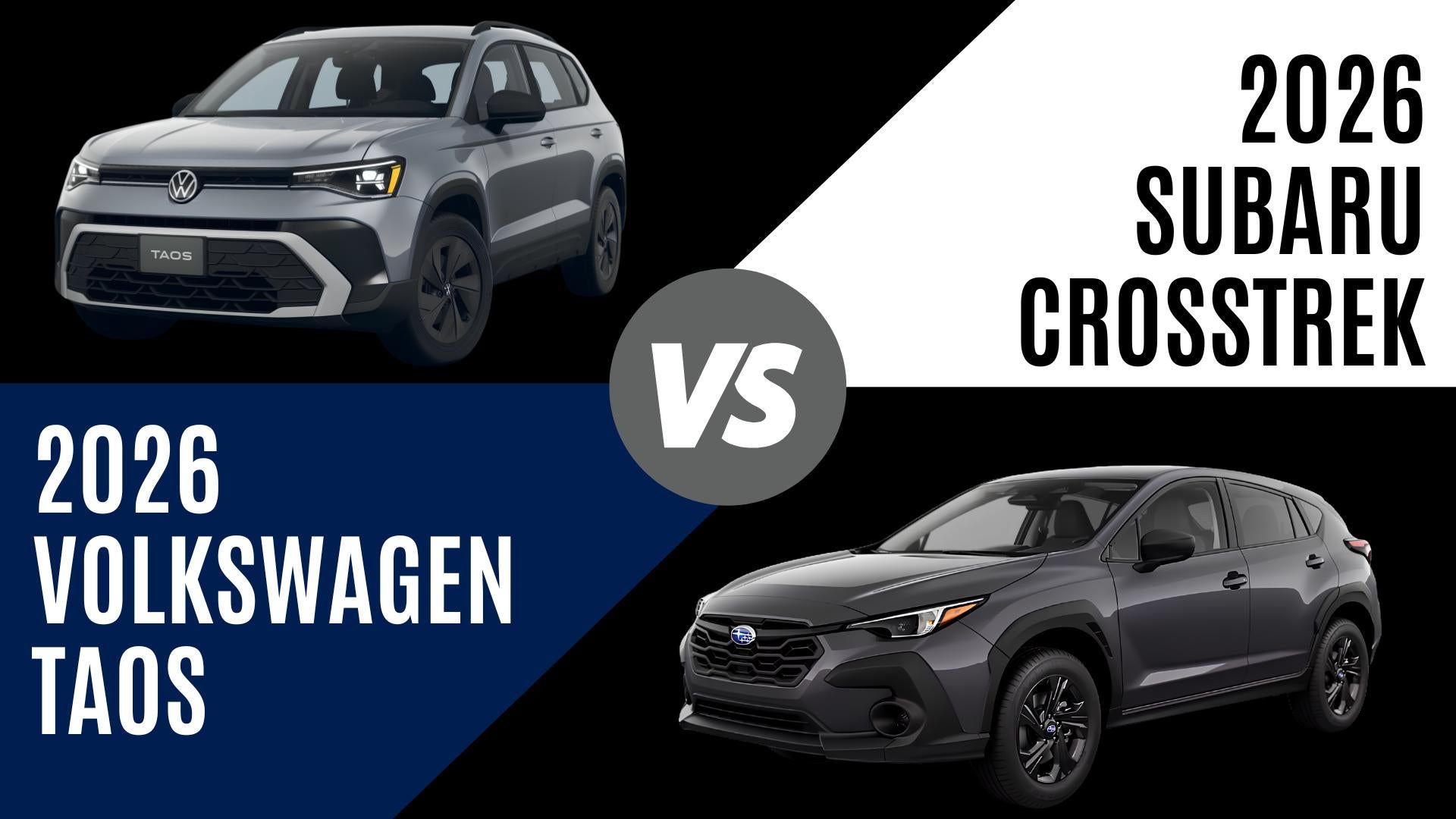
The Volkswagen Taos and Subaru Crosstrek take noticeably different approaches to the subcompact SUV segment. Volkswagen leans into upscale styling, turbocharged performance, and a more refined cabin experience, while Subaru focuses heavily on rugged utility and AWD confidence.
Drivers comparing the 2026 Volkswagen Taos vs 2026 Subaru Crosstrek in Fayetteville, AR, will quickly notice that both SUVs are practical and efficient, but they deliver very different personalities behind the wheel.
Volkswagen’s SUV lineup offers a wide range of comfort, technology, and versatility features across different models.
Vehicle Comparison
2026 Volkswagen Taos
- Digital Cockpit Display
- Spacious Cargo Area
- IQ.DRIVE Safety Technology
2026 Subaru Crosstrek
- Standard AWD
- Up to 9.3″ Ground Clearance
- Subaru EyeSight Safety Suite
The Taos Feels More Sophisticated From the Start
Styling plays a major role in how these SUVs separate themselves from one another.
The Volkswagen Taos features clean body lines, upscale detailing, and a polished overall appearance that gives it a more premium feel than many competitors in the segment. Its compact size also makes it easy to maneuver while still maintaining strong cargo flexibility.
Subaru takes a more rugged direction with the Crosstrek. Protective body cladding, additional ground clearance, and outdoors-inspired styling cues reinforce its adventurous image.
Both SUVs remain practical for daily use, but the Taos creates the more refined first impression.
Design highlights worth comparing:
- Taos: upscale and modern exterior styling
- Crosstrek: rugged and adventure-focused design
- Both: versatile subcompact SUVs for commuting and travel
Turbocharged Power Gives the Taos a More Responsive Feel
Performance differences become noticeable quickly during highway driving and daily commuting.
The Taos uses a turbocharged 1.5-liter engine producing 174 horsepower paired with an eight-speed automatic transmission. Acceleration feels responsive at lower speeds, and the suspension stays composed during normal driving situations.
Subaru equips every Crosstrek with a 180-horsepower 2.5-liter engine and a continuously variable automatic transmission. Standard all-wheel drive comes included across the lineup.
Although the Crosstrek feels comfortable and capable in rough weather and light off-road conditions, the Taos delivers a smoother and more refined on-road driving experience overall.
Volkswagen AWD capability helps provide added traction during changing road and weather conditions.
Performance comparison highlights:
- Taos: turbocharged engine with responsive acceleration
- Crosstrek: standard AWD across the lineup
- Both: efficient performance for everyday driving
Interior Space Helps the Taos Stand Out
Smaller SUVs can sometimes feel cramped inside, but the Taos does a strong job maximizing passenger and cargo room.
Rear-seat passengers benefit from generous legroom, while the cargo area provides impressive flexibility for luggage, backpacks, groceries, and outdoor gear. Available ventilated front seats, ambient lighting, panoramic sunroof options, and leather upholstery help elevate the cabin further.
Subaru prioritizes comfort and utility inside the Crosstrek, although the interior layout feels more functional than upscale. Cargo capacity remains practical, but the Taos provides more overall room behind the rear seats.
Long commutes and weekend trips feel more comfortable inside the Taos thanks to its airy cabin layout and premium interior touches.
Interior highlights worth comparing:
- Taos: spacious rear seating and larger cargo area
- Crosstrek: practical and durable cabin design
- Both: seating for up to five passengers
Volkswagen Places a Bigger Emphasis on Cabin Technology
Technology is one of the areas where the Taos creates a stronger premium feel.
Every Taos includes a fully digital gauge cluster and an 8-inch infotainment touchscreen with Apple CarPlay and Android Auto compatibility. Upper trims add wireless charging, navigation, wireless smartphone connectivity, and upgraded audio systems.
The Crosstrek offers either a standard 7-inch touchscreen or an available 11.6-inch display, depending on trim level. Wireless Apple CarPlay and Android Auto are available on higher trims.
Volkswagen’s infotainment layout feels cleaner and more modern overall, especially on upper trims with additional connected features.
Modern infotainment systems play an important role in daily convenience and connectivity.
Technology comparison highlights:
- Taos: digital cockpit and premium infotainment layout
- Crosstrek: available 11.6-inch touchscreen
- Both: Apple CarPlay and Android Auto compatibility
Driver-Assistance Features Are Strong in Both SUVs
Safety technology remains a major priority for many compact SUV shoppers.
The Taos includes standard forward-collision warning, automated emergency braking, adaptive cruise control, blind-spot monitoring, rear cross-traffic alert, and lane-centering assistance.
Every Crosstrek comes standard with Subaru’s EyeSight driver-assistance suite, which includes adaptive cruise control, lane-keeping assist, and automated braking systems.
Volkswagen’s IQ.DRIVE safety systems help support safer commuting and highway driving.
Safety comparison highlights:
- Taos: standard IQ.DRIVE safety technology
- Crosstrek: standard Subaru EyeSight suite
- Both: advanced driver-assistance features
Fuel Economy Stays Competitive Between Both Models
Efficiency remains important for buyers shopping in the small SUV segment.
The front-wheel-drive Taos achieves up to 28 MPG in the city and 36 MPG on the highway, while AWD versions deliver up to 33 MPG on the highway.
The Crosstrek achieves up to 26 MPG in the city and 33 MPG on the highway, depending on trim and configuration.
Both SUVs remain efficient enough for commuting and travel, though the Taos offers stronger highway MPG ratings, additional cargo flexibility, and turbocharged responsiveness.
Efficiency highlights worth comparing:
- Taos: stronger highway fuel economy ratings
- Crosstrek: standard AWD with competitive MPG
- Both: efficient SUVs for commuting and road trips
The Crosstrek Has an Edge for Off-Road Use
Capability away from pavement is one area where the Crosstrek clearly separates itself.
Ground clearance ranging from 8.7 to 9.3 inches, standard AWD, and available all-terrain tires help the Crosstrek feel more comfortable on rough roads and light trails.
The Taos still handles changing weather confidently with available AWD, but Volkswagen prioritizes on-road comfort, technology, and refinement more heavily than trail-focused capability.
Recent Taos updates added refreshed styling, upgraded technology, and additional premium features throughout the lineup.
Capability highlights worth considering:
- Crosstrek: stronger off-road capability and ground clearance
- Taos: refined road manners with available AWD
- Subaru: more trail-focused personality
Which Small SUV Fits Fayetteville Drivers Better?
Standard all-wheel drive and rugged capability remain major strengths for the Subaru Crosstrek.
For many Fayetteville-area drivers, however, the Volkswagen Taos delivers the stronger balance of comfort, technology, cargo space, and premium styling. Its turbocharged performance, spacious interior, digital cockpit features, and refined road manners help it stand out in the growing subcompact SUV segment.
Ready to experience the Volkswagen Taos in person? Visit Crain Volkswagen of Fayetteville to explore available trims and features today.
FAQs
Q: Does the Volkswagen Taos offer all-wheel drive?
A: Yes. Volkswagen offers available 4MOTION all-wheel drive on the Taos for added traction and confidence during changing weather conditions.
Q: Which SUV offers more cargo space?
A: The Volkswagen Taos provides more cargo space behind the rear seats than the Subaru Crosstrek.
Q: What makes the Volkswagen Taos different from the Crosstrek?
A: The Taos emphasizes refined interior design, premium technology, turbocharged performance, and a more upscale overall driving experience.
Gas or Hybrid? Comparing Two Popular Compact SUVs in Northwest Arkansas
Compact SUVs continue dominating the market because they balance passenger space, technology, efficiency, and practicality better than almost any other segment. In Fayetteville and Northwest Arkansas, many drivers compare the Volkswagen Tiguan and Toyota RAV4 because both models offer versatile interiors and strong everyday usability while taking very different approaches to performance and efficiency.
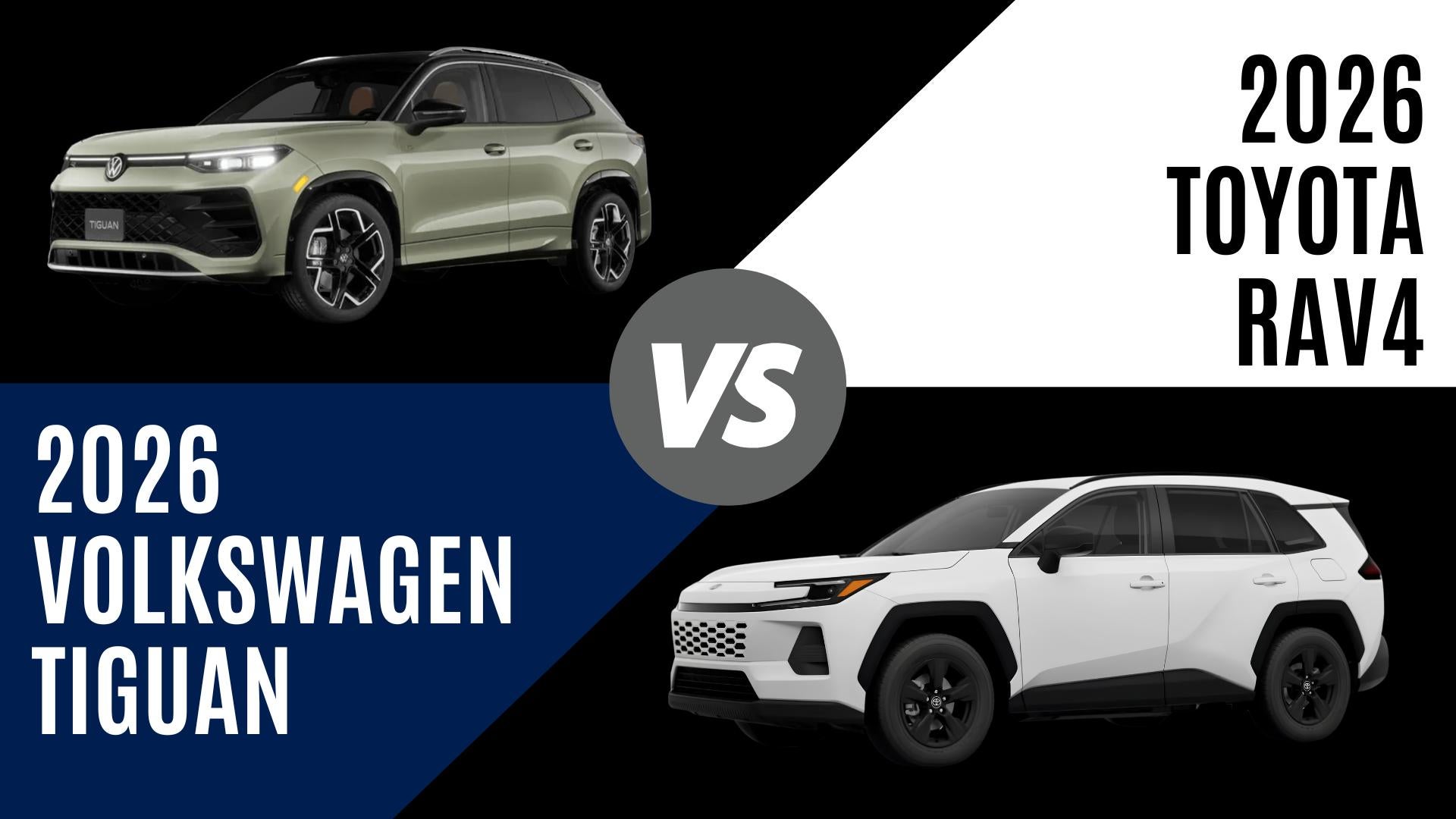
The 2026 Volkswagen Tiguan vs 2026 Toyota RAV4 in Fayetteville, AR comparison highlights two SUVs aimed at different priorities. This comparison focuses on the gas-powered Volkswagen Tiguan and the hybrid-only Toyota RAV4 lineup. Toyota now builds the RAV4 exclusively with hybrid and plug-in hybrid powertrains, while Volkswagen continues emphasizing turbocharged gas performance and traditional driving dynamics in the Tiguan.
Volkswagen’s SUV lineup includes a variety of models designed around technology, comfort, and flexible daily usability.
Vehicle Comparison
2026 Volkswagen Tiguan
- Digital Cockpit Pro
- Available Massaging Seats
- IQ.DRIVE Safety Suite
2026 Toyota RAV4
- Hybrid-Only Powertrain
- Available 12.9″ Touchscreen
- Toyota Safety Sense
The Tiguan Delivers a More Upscale Appearance
Exterior styling gives these SUVs very different personalities.
Sharp body lines, premium design details, and a more refined overall appearance help the Tiguan stand out in a crowded SUV segment. Around Fayetteville, its styling feels especially appealing for drivers wanting something practical without sacrificing sophistication.
Toyota takes a more rugged direction with the redesigned RAV4. Boxier proportions and tougher styling cues help reinforce its outdoors-focused image.
Both SUVs offer versatility, but the Tiguan creates a more premium first impression.
Design highlights worth comparing:
- Tiguan: upscale European-inspired styling
- RAV4: rugged and adventure-focused appearance
- Both: compact SUVs with seating for five
Turbocharged Gas Performance vs Hybrid Efficiency
Performance becomes one of the biggest differences between these SUVs.
The Tiguan offers a turbocharged 2.0-liter engine producing 201 horsepower on most trims, while the new SEL R-Line Turbo increases output to 268 horsepower and comes standard with all-wheel drive. An eight-speed automatic transmission helps deliver smoother and more traditional driving behavior compared to many hybrid competitors.
Toyota equips the RAV4 with hybrid-only powertrains for 2026. Hybrid models produce between 226 and 236 horsepower depending on drivetrain configuration, while plug-in hybrid versions deliver up to 320 horsepower and significantly quicker acceleration.
The Tiguan focuses more on refined road manners and responsive handling, while the RAV4 emphasizes electrified efficiency and hybrid performance.
Volkswagen AWD capability helps add confidence during changing road and weather conditions throughout Northwest Arkansas.
Performance comparison highlights:
- Tiguan: up to 268 hp with turbocharged gas performance
- RAV4: hybrid-only lineup with up to 320 hp
- Both: available AWD configurations
Cabin Comfort and Cargo Space Matter for Everyday Driving
Interior practicality remains a major strength for both SUVs.
The Tiguan gains additional cargo room for 2026 while also improving overall material quality throughout the cabin. Available leather upholstery, wood trim accents, ventilated seats, and massaging front seats help create a noticeably more upscale environment.
Toyota gives the RAV4 a spacious, functional cabin with useful storage and solid passenger space. Cargo capacity remains competitive, although the interior presentation feels more rugged than refined.
For many drivers spending long hours commuting or traveling, the Tiguan delivers a more premium cabin experience.
Interior highlights worth comparing:
- Tiguan: upscale materials and expanded cargo flexibility
- RAV4: spacious and practical interior layout
- Both: roomy seating for passengers and cargo
Volkswagen Brings a More Premium Technology Experience
Cabin technology plays a major role in how modern SUVs feel during daily driving.
Every Tiguan includes a standard 12.9-inch infotainment touchscreen, while upper trims offer an available 15-inch display running Volkswagen’s latest Digital Cockpit Pro system. Wireless charging, premium audio, and available head-up display technology help elevate the experience further.
Toyota equips the RAV4 with a standard 10.5-inch touchscreen and an available 12.9-inch display. Wireless Apple CarPlay and Android Auto are included throughout the lineup.
The Tiguan’s dashboard layout feels cleaner and more sophisticated, especially on higher trims with upgraded interior materials and premium features.
Volkswagen infotainment and connectivity systems continue evolving across the lineup.
Technology comparison highlights:
- Tiguan: standard 12.9-inch touchscreen and Digital Cockpit Pro
- RAV4: available 12.9-inch infotainment display
- Both: wireless smartphone connectivity compatibility
Driver-Assistance Features Are Standard Across Both SUVs
Safety technology is a major priority for many compact SUV shoppers.
The Tiguan includes standard forward-collision warning, automated emergency braking, blind-spot monitoring, adaptive cruise control, and lane-centering technology. Volkswagen also adds additional airbags for 2026, bringing the total to 10.
Toyota equips every RAV4 with a comprehensive collection of driver-assistance systems, including adaptive cruise control, lane-keeping assist, and automated emergency braking with pedestrian detection.
Volkswagen’s IQ.DRIVE system helps support safer commuting and highway travel around Fayetteville.
Safety comparison highlights:
- Tiguan: standard IQ.DRIVE safety suite and 10 airbags
- RAV4: extensive standard Toyota Safety Sense features
- Both: advanced driver-assistance technology
Fuel Economy Clearly Favors the Hybrid RAV4
Fuel economy becomes one of the clearest differences in this comparison because the Tiguan uses a traditional gas-powered turbocharged engine, while the RAV4 lineup is now entirely hybrid-based.
The front-wheel-drive Tiguan achieves up to 26 MPG in the city and 34 MPG on the highway, while AWD versions deliver slightly lower ratings depending on trim.
Toyota’s hybrid-only RAV4 lineup achieves up to 47 MPG in the city and 43 MPG combined in its most efficient configurations. Even AWD models remain significantly more fuel-efficient than the Tiguan.
Volkswagen counters with stronger traditional driving dynamics, turbocharged responsiveness, and a more refined highway-driving feel.
Efficiency highlights worth comparing:
- Tiguan: turbocharged gas performance with competitive highway MPG
- RAV4: class-leading hybrid fuel economy
- Both: practical SUVs for commuting and travel
The Tiguan Feels More Refined Behind the Wheel
Driving character helps separate these SUVs more than many buyers expect.
Volkswagen gives the Tiguan a heavier steering feel, composed handling, and more responsive road manners, making it feel more engaging during daily driving.
Toyota prioritizes smooth hybrid operation and comfort, although some drivers may notice additional engine noise during harder acceleration.
The latest Tiguan updates continue to improve performance, comfort, and technology across the lineup.
Driving experience highlights:
- Tiguan: more refined handling and premium road feel
- RAV4: smooth hybrid efficiency and comfort-focused driving
- Volkswagen: stronger European-inspired driving dynamics
Which SUV Fits Fayetteville Drivers Better?
Hybrid fuel economy and electrified performance remain major advantages for the Toyota RAV4.
For many Fayetteville-area drivers, however, the Volkswagen Tiguan delivers the stronger balance of comfort, premium design, cargo flexibility, and engaging road manners. Its upscale cabin, available 268-horsepower turbocharged engine, large infotainment displays, and refined driving experience help it stand out in the compact SUV segment.
Ready to experience the Volkswagen Tiguan in person? Visit Crain Volkswagen of Fayetteville to explore available trims and features today.
FAQs
Q: Is the 2026 Toyota RAV4 still available with a gas-only engine?
A: No. The 2026 Toyota RAV4 lineup is now hybrid-only, including both hybrid and plug-in hybrid models.
Q: Does the Volkswagen Tiguan offer all-wheel drive?
A: Yes. Volkswagen offers available 4MOTION all-wheel drive on the Tiguan, while the SEL R-Line Turbo includes AWD as standard equipment.
Q: Which SUV has the more upscale interior?
A: The Volkswagen Tiguan offers a more premium cabin design with available leather seating, wood accents, massaging seats, and larger infotainment displays.
Life around Fayetteville doesn’t slow down for long. Between work, school, and everything happening across Northwest Arkansas, having a vehicle that actually fits your routine makes everyday driving easier.
That’s where Volkswagen family SUVs in Fayetteville, AR come into the conversation. With options like the Atlas, Atlas Cross Sport, Tiguan, and Taos, Volkswagen offers a range of SUVs that balance space, efficiency, and everyday usability. From commuting along I-49 to getting out around Northwest Arkansas, there’s a model designed to match how you drive.
Visit our model research page to see all available models.
What Fayetteville Drivers Need From an SUV
Not every SUV fits the same lifestyle. Around Fayetteville, drivers often need something that can handle a mix of short trips, longer drives, and everything in between.
Space matters, especially for families, but so does maneuverability. Parking around town, navigating traffic, and handling daily errands all play a role in choosing the right vehicle.
That balance between size and practicality is where Volkswagen’s SUV lineup stands out. Each model offers a different approach, giving drivers the ability to choose what fits their needs instead of settling for something that feels too big or too limited.
If you’re thinking about how your vehicle fits into your routine, it can also help to explore local spots and activities.
Volkswagen Atlas: Space for Growing Families
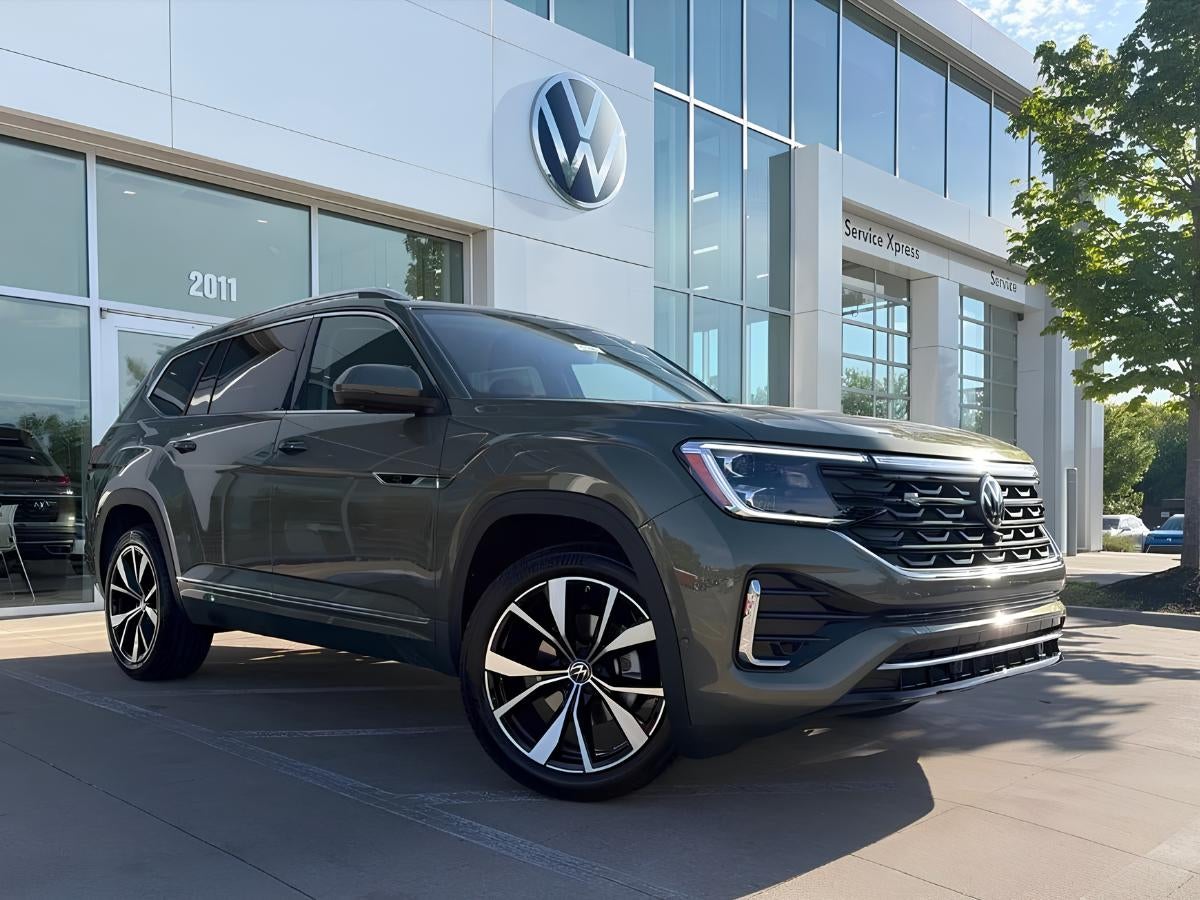
For families who need room to spread out, the Volkswagen Atlas is the largest SUV in the lineup. With three rows of seating and plenty of cargo space, it’s built for households that need flexibility on a daily basis.
Getting passengers in and out is simple, and the extra room in the third row makes it easier to bring along friends, teammates, or extended family. That added space also helps on longer drives, where comfort becomes more important over time.
The Atlas is a strong choice for:
- Larger families
- Carpooling and group travel
- Road trips across Arkansas
If space is a priority, you can also take a closer look at how the Atlas is designed for cargo and flexibility.
Volkswagen Atlas Cross Sport: Style with Everyday Practicality
Not every family needs three rows, but many still want extra space and comfort. The Atlas Cross Sport offers that middle ground, keeping a roomy interior while leaning more toward a two-row setup.
Its design gives it a slightly sportier look, which appeals to drivers who want something practical without feeling oversized. At the same time, it still provides enough room for groceries, gear, and everyday needs.
This model fits drivers who want:
- A balance between style and space
- Two-row comfort with extra cargo room
- A practical daily driver
Volkswagen Tiguan: Versatility in a Midsize Package
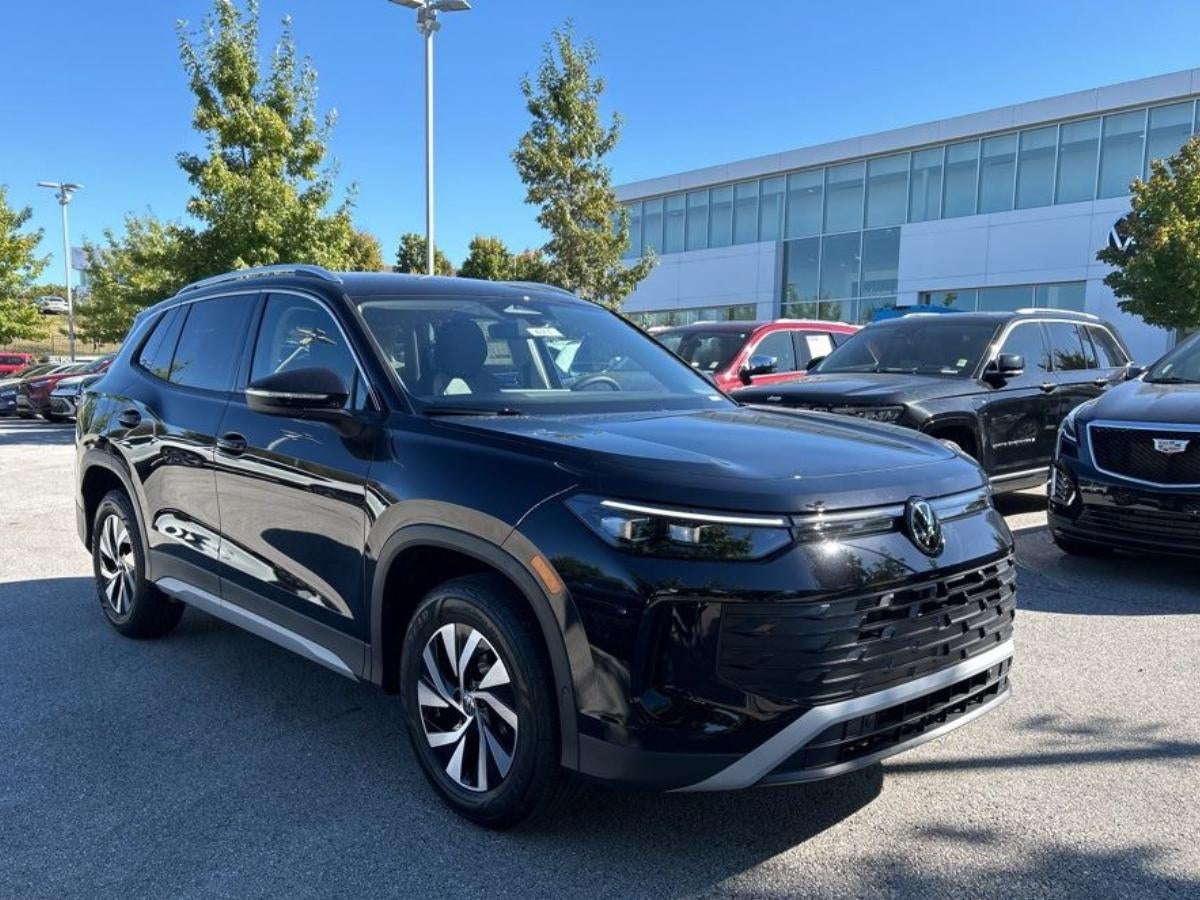
For many Fayetteville drivers, the Tiguan hits a sweet spot. It offers available third-row seating while staying easier to manage than larger SUVs.
That makes it a practical choice for families who occasionally need extra seating but don’t want to drive something larger every day. It’s also well-suited for navigating tighter spaces around town while still providing enough room for passengers and cargo.
The Tiguan is a strong option for:
- Families who want flexibility without added bulk
- Daily driving around Fayetteville
- Occasional extra passenger space
If you want to explore midsize options, you can take a look at how the Tiguan fits into Volkswagen’s SUV lineup.
Volkswagen Taos: Efficiency for Everyday Driving
For drivers focused on efficiency and simplicity, the Volkswagen Taos offers a smaller SUV option that still delivers on comfort and usability.
It’s easy to maneuver, making it a great fit for commuting, parking, and running errands around Fayetteville. At the same time, it still provides enough interior space for passengers and everyday cargo.
The Taos makes sense for:
- Smaller households
- First-time SUV buyers
- Drivers with shorter commutes or city-focused driving
You can also compare how the Taos stacks up against similar compact SUVs like the Honda HR-V.
Choosing the Right SUV for Your Routine
With several options available, the best choice often comes down to how you plan to use your vehicle each day.
Some drivers prioritize passenger space, while others focus on fuel efficiency or ease of driving. Thinking about your daily routine can help narrow things down quickly.
A few questions to consider:
- How many passengers do you usually carry?
- Do you need a third row regularly?
- How often do you drive long distances?
If you’re still deciding, it can help to compare the full lineup side by side.
Technology and Comfort Across the Lineup
No matter which Volkswagen SUV you choose, you’ll find features designed to make driving easier and more enjoyable.
From intuitive infotainment systems to smartphone connectivity, these vehicles are built to keep you connected while on the road. Comfort-focused features also help make longer drives feel more relaxed, which is especially helpful for families and commuters alike.
To better understand how these systems work, you can explore Volkswagen’s advanced safety and driver-assist features.
A Practical Choice for Families and Daily Drivers
Volkswagen SUVs are designed to handle a wide range of needs. From larger families to solo commuters, the lineup offers something that fits different lifestyles without overcomplicating the decision.
With options that vary in size, seating, and efficiency, drivers in Fayetteville can find a model that works for both everyday routines and occasional trips.
Explore Volkswagen Family SUVs in Fayetteville, AR
Getting a closer look at each model can help you decide which one fits your routine best. Sitting inside, exploring the space, and taking a drive make it easier to see how each SUV handles daily life.
At Crain Volkswagen of Fayetteville, drivers can explore the full lineup of Volkswagen family SUVs in Fayetteville, AR, and find the one that fits their needs across Northwest Arkansas.
Choosing an SUV isn’t just about size. It’s about how it fits into your daily routine around Fayetteville, from quick trips across town to navigating traffic near campus or heading down I-49 for the weekend. Volkswagen’s SUV lineup gives drivers a range of options that focus on practicality, efficiency, and value, but each one serves a different purpose.
The question becomes simple: which one actually fits your life?
Volkswagen Taos: Practical, Efficient, and Budget-Friendly
The Taos is the most compact SUV in the Volkswagen lineup, and it’s built with efficiency and affordability in mind.
- Compact size that’s easy to maneuver around Fayetteville
- Strong fuel efficiency for daily driving
- Lower starting price compared to larger SUVs
This is a solid fit for drivers who want something simple, efficient, and easy to live with. It works well for commuting, running errands, and keeping overall costs more manageable. Drivers often compare which Volkswagen models offer strong fuel efficiency for daily driving.
Volkswagen Tiguan: A Flexible Middle Ground
The Tiguan adds space without jumping into full-size territory. It’s one of the most versatile options in the lineup.
- Available third-row seating for added flexibility
- Comfortable interior for both short and longer drives
- Balanced mix of space, features, and efficiency
Many drivers land here because it offers a little bit of everything. It’s roomy enough for growing families while still being practical for everyday use around Fayetteville. It can also help to explore how the Tiguan compares to other compact SUVs in terms of space and versatility.
Volkswagen Atlas: Space for Growing Families
When interior space becomes a priority, the Atlas stands out. It’s designed for drivers who need room to spread out.
- Three rows with generous passenger space
- Larger cargo area for trips, sports gear, or luggage
- Built for family comfort on longer drives
For families who regularly travel across Northwest Arkansas or need extra room day to day, the Atlas delivers strong value for its size. Families often take a closer look at how much room larger SUVs, like the Atlas, offer for passengers and cargo.
Volkswagen Atlas Cross Sport: Style Meets Function
The Atlas Cross Sport offers many of the same benefits as the Atlas, just in a slightly different package.
- Two-row design with a sportier look
- Spacious interior without the third row
- Strong balance of comfort and style
It’s a good match for drivers who want the space of a larger SUV but prefer a more streamlined design.
A Quick Look Ahead: Volkswagen ID.Buzz
While not a traditional SUV, the ID.Buzz brings something unique to the lineup.
- All-electric driving experience
- Spacious interior with a different layout
- Designed for drivers looking toward the future
For those interested in electric options, it’s worth keeping an eye on how models like this fit into everyday driving needs. Drivers often explore which tech features make everyday driving more convenient and connected.
Comparing Value, Efficiency, and Space
Each Volkswagen SUV brings something different to the table, and the right choice depends on what matters most in your day-to-day driving.
- Looking to keep fuel costs lower → Taos
- Need a mix of space and efficiency → Tiguan
- Want maximum room for family life → Atlas
- Prefer style with practical space → Atlas Cross Sport
Finding the Right Fit in Fayetteville
The best SUV is the one that fits your routine without making things more complicated. Volkswagen’s lineup makes it easier to find something that matches your budget, your space needs, and how you actually drive around Fayetteville.
At Crain Volkswagen Fayetteville, drivers can explore each option in person and get a better feel for which model fits their lifestyle. Check out our model research page to see all VW vehicles.
FAQs About Volkswagen SUVs in Fayetteville, AR
Which Volkswagen SUV is the most fuel-efficient?
The Taos is known for strong fuel efficiency, making it a good choice for drivers who want to manage fuel costs on a daily basis.
Which Volkswagen SUV is best for families?
The Atlas is a popular choice for families thanks to its spacious three-row design and comfortable interior.
Is the Volkswagen Tiguan a good middle option?
Yes, the Tiguan offers a balance of space, features, and efficiency, making it a flexible option for many drivers.
What’s the difference between the Atlas and the Atlas Cross Sport?
The Atlas has three rows of seating, while the Atlas Cross Sport offers two rows with a sportier design and similar interior space.
Where can I find Volkswagen SUVs in Fayetteville, AR?
You can explore the full lineup at Crain Volkswagen Fayetteville, serving drivers throughout Fayetteville and the surrounding areas.
Affordable Efficiency and Everyday Comfort in Fayetteville
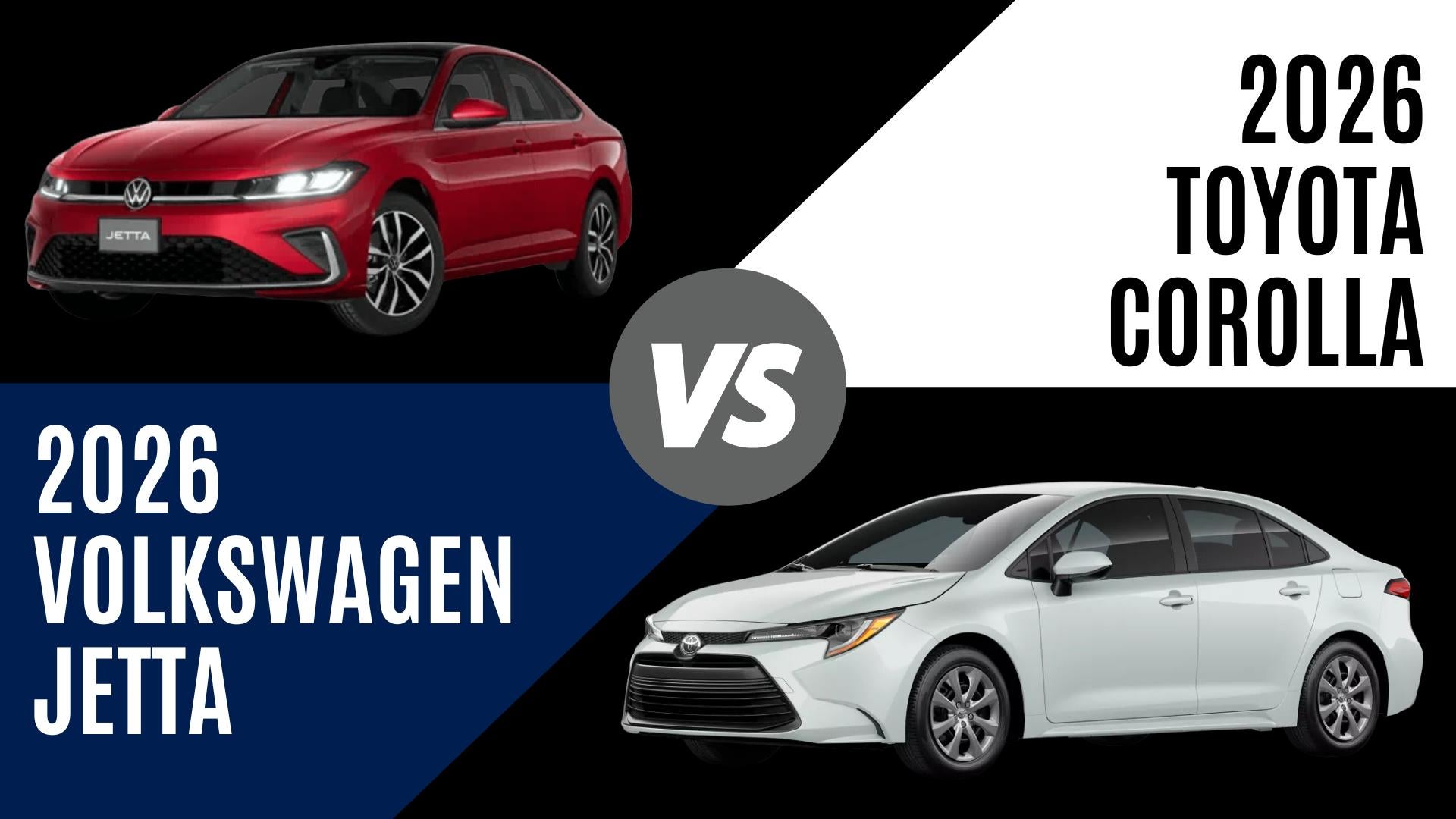
For drivers looking for a practical and efficient sedan, the 2026 Volkswagen Jetta vs 2026 Toyota Corolla in Fayetteville, AR comes down to how each model balances fuel economy, comfort, and overall value.
Both vehicles are known for reliability and affordability, but they take slightly different approaches. The Corolla emphasizes fuel efficiency, especially with its available hybrid, while the Jetta focuses on delivering a more comfortable ride, a refined interior, and strong everyday usability.
This comparison focuses primarily on the gas-powered versions, while also noting where the Corolla’s hybrid option fits into the picture.
To explore trims, features, and configurations in more detail, visit the Volkswagen Jetta model research page.
Vehicle Comparison
2026 Volkswagen Jetta
- Turbocharged Engine
- Spacious Interior & Trunk
- Digital Cockpit Display
2026 Toyota Corolla
- Hybrid Availability
- Fuel Efficiency Focus
- Standard Safety Suite
Clean, Sophisticated Styling vs Familiar Simplicity
These two sedans take different approaches to design.
A sleek and understated design gives the Jetta a more refined, European-inspired look that feels a step above typical compact sedans.
The Corolla sticks with a familiar and practical design, offering a straightforward appearance that prioritizes function over style.
Design highlights:
- Jetta: clean, refined European styling
- Corolla: simple, practical design
- Both are approachable, but the Jetta feels more upscale
Turbo Efficiency vs Traditional Power
Performance in this segment is less about speed and more about how a car feels day to day.
The Jetta features a 158-horsepower turbocharged engine paired with an 8-speed automatic transmission, delivering smooth acceleration and a relaxed driving experience.
The Corolla uses a 169-horsepower engine with a CVT, which prioritizes efficiency but can feel less refined during acceleration.
Performance comparison:
- Jetta: turbo engine with traditional automatic
- Corolla: slightly more horsepower but CVT-based
- Jetta delivers a smoother, more composed drive
Interior Comfort and Everyday Space
Comfort is one of the Jetta’s biggest strengths.
A spacious cabin with excellent visibility and supportive seating makes it easy to settle in for both short commutes and longer drives. The Jetta also offers 14 cubic feet of trunk space, slightly more than the Corolla.
Drivers can also explore what makes the Jetta a smart compact choice.
The Corolla provides a comfortable interior as well, but its layout is more focused on simplicity than maximizing space and refinement.
Interior highlights:
- Jetta: more spacious and comfort-focused cabin
- Corolla: functional and straightforward interior
- Both seat 5 passengers
- Jetta offers more usable cargo space
Technology and Connectivity
Technology is well-covered in both vehicles, but with different execution.
The Jetta includes a digital gauge cluster and an intuitive infotainment system, along with available upgrades like wireless charging and premium audio. Drivers can also explore VW infotainment features.
The Corolla also features an 8-inch touchscreen with an available 10.5-inch display, along with standard smartphone integration.
Technology comparison:
- Jetta: driver-focused digital cockpit
- Corolla: larger available screen
- Both support Apple CarPlay and Android Auto
- Jetta feels more cohesive and refined
Safety and Driver Assistance Features
Both sedans come equipped with a strong set of safety features.
The Jetta includes standard features like forward-collision warning, automatic emergency braking, blind-spot monitoring, and rear cross-traffic alert, with additional driver-assistance options available. Learn more about Volkswagen’s IQ.Drive.
The Corolla includes Toyota Safety Sense 3.0, offering a wide range of standard features including adaptive cruise control and lane-keeping assist.
Safety comparison:
- Both offer strong safety technology
- Corolla includes more features as standard
- Jetta provides a refined and customizable setup
Performance, Fuel Economy, and Daily Efficiency
Fuel economy is a major factor for compact sedan buyers.
The Jetta delivers approximately 33–34 MPG combined, with excellent highway efficiency.
The Corolla offers around 35 MPG combined for gas models, while the hybrid version reaches significantly higher fuel economy.
While the Corolla leads in maximum MPG, especially with the hybrid, the Jetta provides a strong balance of efficiency, comfort, and performance in a gas-powered package.
Efficiency comparison:
- Jetta: excellent MPG with smooth driving experience
- Corolla: higher MPG, especially with hybrid
- Both are efficient, but with different priorities
Ownership Value and Long-Term Benefits
Affordability goes beyond fuel savings. It also includes ownership costs and coverage.
Volkswagen offers a 4-year/50,000-mile limited warranty and 2 years of complimentary maintenance, providing strong value and peace of mind. Drivers can also explore what’s included in a VW warranty.
Toyota includes a 3-year/36,000-mile limited warranty, along with competitive maintenance coverage.
Ownership highlights:
- Jetta: longer limited warranty coverage
- Corolla: strong reputation for reliability
- Jetta offers better overall ownership value
Why the Volkswagen Jetta Stands Out in Fayetteville
Both sedans deliver strong efficiency and everyday usability, but they cater to slightly different priorities.
The Corolla is a great option for drivers focused on maximizing fuel economy, especially with its hybrid option.
For drivers comparing the 2026 Volkswagen Jetta vs 2026 Toyota Corolla in Fayetteville, AR, the Jetta stands out with its comfortable ride, refined interior, turbocharged efficiency, and strong overall value. It offers a more balanced and enjoyable driving experience for everyday life in Northwest Arkansas.
FAQs
What makes the Volkswagen Jetta a strong daily driver?
The Jetta offers a comfortable ride, spacious interior, and smooth turbocharged performance, making it well-suited for everyday commuting.
What kind of fuel economy does the Volkswagen Jetta offer?
The Volkswagen Jetta delivers around 33–34 MPG combined, offering strong efficiency paired with a comfortable and refined ride.
Which sedan feels more comfortable on longer drives?
The Volkswagen Jetta is typically more comfortable for longer drives thanks to its refined ride quality and spacious interior.
Affordable Efficiency Meets Everyday Practicality in Fayetteville
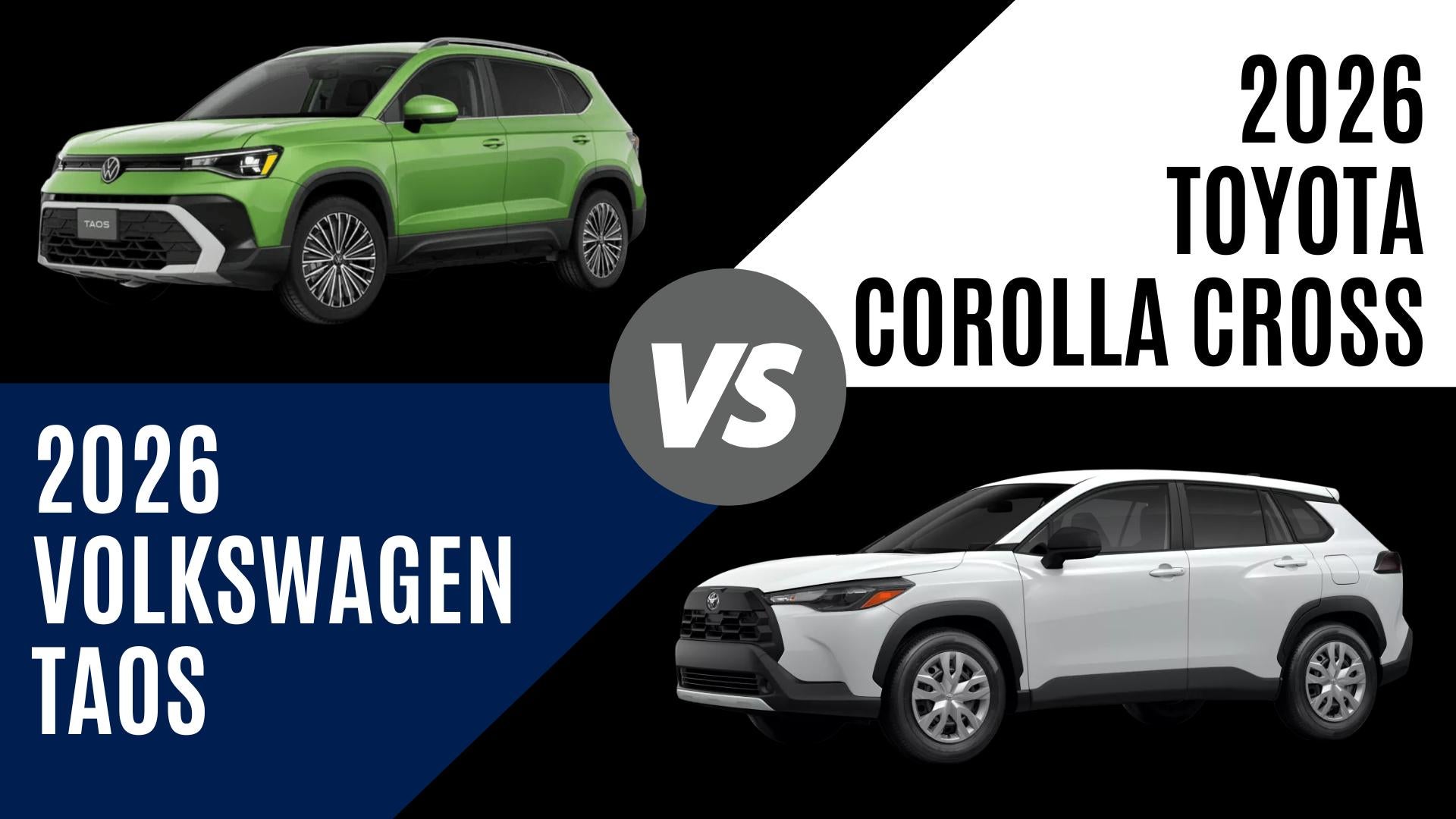
If you’re shopping for a small SUV in Northwest Arkansas, the 2026 Volkswagen Taos vs 2026 Toyota Corolla Cross in Fayetteville, AR comes down to balancing fuel efficiency, affordability, and daily usability. Both models are designed to be practical, budget-conscious options, but they go about it in different ways.
This comparison focuses on gas-powered versions of both SUVs, giving a clear look at how they stack up for real-world driving in and around Fayetteville. While the Corolla Cross leans into simplicity and fuel savings, the Taos brings a more refined interior, stronger driving feel, and surprising space for the segment.
To explore trims, features, and configurations in more detail, visit the Volkswagen Taos model research page.
Vehicle Comparison
2026 Volkswagen Taos
- Turbocharged Engine
- Spacious Cargo & Rear Legroom
- Digital Cockpit Display
2026 Toyota Corolla Cross
- Fuel Efficiency Focus
- Cargo-Focused Interior
- Available 10.5-inch Touchscreen
Clean European Design vs Simple Practical Styling
Design is often the first thing drivers notice, and these two SUVs take different approaches.
A clean, refined design gives the Taos a more upscale appearance, with subtle styling cues that reflect Volkswagen’s European roots.
The Corolla Cross keeps things simple and functional, with a straightforward design that prioritizes practicality over visual flair.
Design highlights:
- Taos: refined, European-inspired styling
- Corolla Cross: simple, functional design
- Both prioritize practicality, but with different personalities
Turbo Performance vs Basic Efficiency
Performance plays a bigger role than many drivers expect, especially in daily driving.
The Taos is powered by a 174-horsepower turbocharged engine paired with an 8-speed automatic transmission, delivering smooth acceleration and better low-speed responsiveness.
The Corolla Cross uses a 169-horsepower engine with a CVT, which is tuned more for efficiency than performance and can feel less responsive under acceleration.
Performance comparison:
- Taos: 174 hp turbo engine with traditional automatic
- Corolla Cross: 169 hp engine with CVT
- AWD available on both
- Taos offers a more engaging and responsive drive
Interior Space and Everyday Comfort
Interior space is where the Taos creates a noticeable advantage.
With an airy cabin, high-quality materials, and 37.9 inches of rear legroom, the Taos feels more spacious than many competitors in this class. Cargo capacity is also strong, with 28 cubic feet behind the rear seats and up to 66 cubic feet with seats folded.
The Corolla Cross provides solid practicality, but with 24 cubic feet of cargo space, it falls short of the Taos in overall storage capacity.
Interior highlights:
- Taos: more rear legroom and larger cargo area
- Corolla Cross: practical but smaller cargo space
- Both seat 5 passengers
- Taos offers more room for passengers and gear
Technology and Connectivity
Technology is another area where differences show up quickly.
Every Taos comes with a digital gauge cluster and an 8-inch infotainment display, with available upgrades like navigation, wireless charging, and premium audio. Drivers can also explore VW technology features.
The Corolla Cross also includes an 8-inch touchscreen, with a 10.5-inch display available on higher trims, along with standard smartphone integration.
Technology comparison:
- Taos: digital cockpit and premium available features
- Corolla Cross: larger available screen on upper trims
- Both support Apple CarPlay and Android Auto
- Taos delivers a more premium, driver-focused layout
Safety and Driver Assistance Features
Both SUVs come equipped with strong safety technology designed for everyday confidence.
The Taos includes features like adaptive cruise control, lane-centering, blind-spot monitoring, and forward-collision warning with automatic emergency braking. Learn more about Volkswagen safety advantages.
The Corolla Cross also offers a wide range of standard safety features, including adaptive cruise control, lane-departure warning, and road sign assist.
Safety comparison:
- Both offer comprehensive safety systems
- Corolla Cross includes many features as standard
- Taos provides advanced driver-assistance with a refined feel
Performance, AWD, and Fuel Economy
Balancing power and efficiency is key for most drivers.
The Taos delivers 174 horsepower with available all-wheel drive and achieves approximately 28–31 MPG combined. To better understand AWD capability, explore Volkswagen 4MOTION.
The Corolla Cross produces 169 horsepower with available AWD and delivers approximately 30–32 MPG combined.
While the Corolla Cross has a slight edge in fuel economy, the Taos balances efficiency with stronger performance and a more engaging driving experience.
Efficiency comparison:
- Taos: strong MPG with better driving performance
- Corolla Cross: slightly higher MPG
- Both offer efficient daily driving
Ownership Value and Long-Term Confidence
Affordability isn’t just about fuel economy. It’s also about long-term ownership.
Volkswagen offers a 4-year/50,000-mile limited warranty, along with complimentary maintenance for 2 years or 20,000 miles, adding value beyond the initial purchase. Drivers can also explore what’s included in a VW warranty.
Toyota includes a 3-year/36,000-mile limited warranty and also offers complimentary maintenance, but with shorter basic coverage.
Ownership highlights:
- Taos: longer limited warranty coverage
- Corolla Cross: solid reliability reputation
- Taos offers stronger overall ownership value
Why the Volkswagen Taos Stands Out in Fayetteville
Both SUVs deliver practical, efficient transportation, but they appeal to slightly different priorities.
The Corolla Cross is a good option for drivers focused primarily on fuel economy and simplicity.
For drivers comparing the 2026 Volkswagen Taos vs 2026 Toyota Corolla Cross in Fayetteville, AR, the Taos stands out with its spacious interior, turbocharged performance, refined design, and strong overall value. It offers a more complete package for daily driving in Northwest Arkansas.
FAQs
What’s the standout feature of the Volkswagen Taos?
The turbocharged engine stands out, offering better responsiveness and a more engaging driving experience than many competitors in this segment.
What kind of fuel economy can drivers expect from the Volkswagen Taos?
The Volkswagen Taos delivers up to 28–31 MPG combined, offering a strong mix of efficiency and performance for daily driving.
Which SUV is better for cargo space and practicality?
The Volkswagen Taos offers more cargo space and rear-seat room, making it the more practical choice for daily use and road trips.
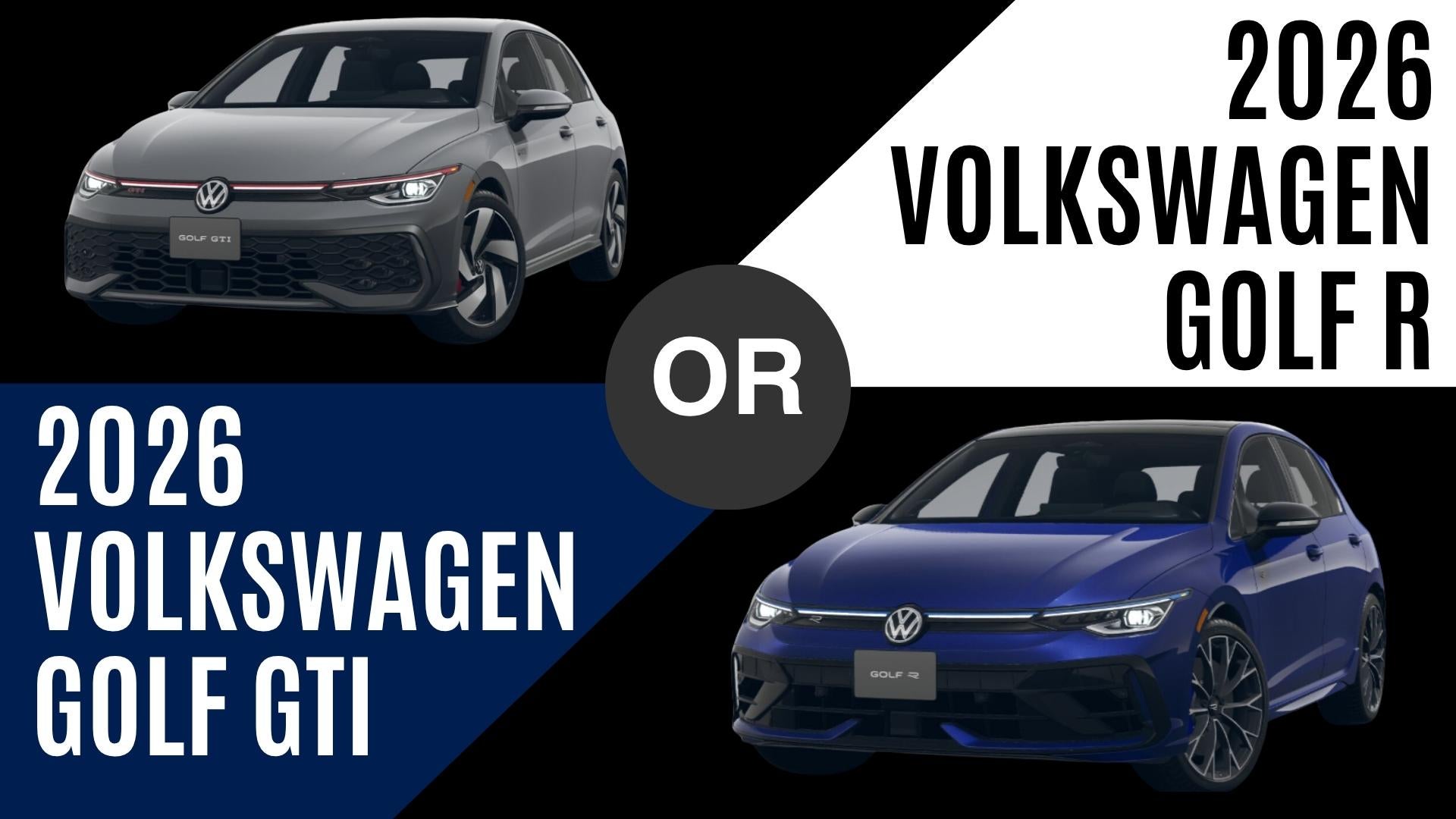
Performance hatchbacks aren’t all built the same, and within Volkswagen’s lineup, the difference between the 2026 Volkswagen Golf GTI vs Golf R in Fayetteville, AR, highlights that perfectly.
While they share the same compact platform and everyday usability, these two models deliver very different driving experiences. One focuses on balance and accessibility, while the other pushes performance further with more power and advanced drivetrain technology.
For drivers around Fayetteville and across Northwest Arkansas, choosing between the GTI and Golf R comes down to how you want your car to feel on your daily commute, on winding roads, and everywhere in between.
Vehicle Comparison
2026 Volkswagen Golf GTI
- Turbocharged 2.0L Engine
- Sport-Tuned Suspension
- Front-Wheel Drive
2026 Volkswagen Golf R
- High-Output Turbocharged Engine
- Performance-Tuned Suspension
- 4MOTION All-Wheel Drive with Torque Vectoring
What Do GTI and Golf R Mean?
The GTI, short for Grand Touring Injection, has built its reputation as one of the most well-rounded performance hatchbacks available. It delivers quick acceleration, responsive handling, and everyday comfort in one practical package.
The Golf R represents Volkswagen’s performance division. It builds on the GTI with more power, advanced all-wheel drive, and performance-focused engineering for drivers who want a more aggressive experience.
To better understand how these models have evolved, you can learn more about what’s new for recent Golf GTI and Golf R models.
Key Takeaways:
- GTI: Balanced performance with everyday usability
- Golf R: Higher-performance engineering with added capability
Design and Hatchback Practicality
Both the Golf GTI and Golf R share a compact hatchback design that makes them easy to drive and practical for daily life in Fayetteville.
The GTI features signature red accents and a clean, sporty design that blends performance with subtle styling.
The Golf R takes a more aggressive approach, with unique accents, aerodynamic details, and a more performance-focused appearance.
Both models benefit from hatchback versatility, offering flexible cargo space for errands, trips, or daily use.
Design Highlights:
- GTI: Classic sporty styling with subtle details
- Golf R: More aggressive design with performance cues
Performance and Driving Dynamics
This is where the biggest differences between the GTI and Golf R become clear.
The Golf GTI is powered by a 241-hp turbocharged 2.0L engine paired with front-wheel drive. It delivers quick acceleration and agile handling, making it fun and responsive for everyday driving.
The Golf R steps things up with a 328-hp turbocharged engine and 4MOTION all-wheel drive with torque vectoring. This system improves traction, cornering, and overall control, especially during spirited driving.
Both models feature sport-tuned suspension systems, but the Golf R is engineered for a higher level of performance and control.
If you want to dive deeper into what makes the GTI such a standout, you can learn more about its performance and appeal.
Performance Highlights:
- GTI: 241 hp, FWD, agile and balanced
- Golf R: 328 hp, AWD with torque vectoring, higher performance ceiling
Interior Comfort and Everyday Usability
Inside, both models offer a driver-focused cabin that balances comfort and sportiness.
The GTI provides a practical interior with supportive seats and a layout that works well for daily driving.
The Golf R builds on that foundation with upgraded materials, sport seats, and a more premium feel overall.
Both vehicles maintain strong hatchback usability, making them easy to live with day to day.
Interior Takeaways:
- GTI: Comfortable, practical, everyday-friendly
- Golf R: More premium feel with sport-focused upgrades
Technology and Driver Experience
Both models feature updated infotainment systems and digital cockpit displays designed to enhance the driving experience.
The GTI focuses on simplicity and ease of use, while still delivering modern connectivity and clear information.
The Golf R enhances this with a more performance-focused display, giving drivers access to more detailed driving data.
To explore more about Volkswagen technology, here’s more key features found across the lineup.
Technology Highlights:
- GTI: Clean, intuitive digital cockpit
- Golf R: Enhanced performance-focused display
Safety and Driver Assistance
Safety is a priority in both models, making them practical choices for everyday driving in Fayetteville.
The GTI includes Volkswagen’s IQ.DRIVE system with features like adaptive cruise control, lane keeping assistance, and forward collision warning.
The Golf R offers similar advanced driver-assistance systems, providing confidence on both short trips and longer drives.
Learn more about how Volkswagen safety systems work and what sets them apart.
Safety Overview:
- GTI: Comprehensive driver-assistance features
- Golf R: Similar advanced safety systems
Fuel Economy and Daily Efficiency
Even with their performance focus, both models remain efficient enough for everyday driving.
The Golf GTI achieves 27 mpg combined, making it a strong option for drivers who want performance without sacrificing efficiency.
The Golf R delivers 25 mpg combined, trading a small amount of fuel economy for increased power and all-wheel-drive capability.
Efficiency Comparison:
- GTI: More efficient for daily driving
- Golf R: Slightly less efficient, more performance-focused
Ownership Value and Everyday Use
Both models come with Volkswagen’s 4-year/50,000-mile warranty, providing peace of mind for long-term ownership.
The GTI stands out as a more accessible performance option, combining fun driving dynamics with everyday usability.
The Golf R offers a higher level of performance and advanced drivetrain capability, appealing to drivers who want more power and control.
Ownership Insights:
- GTI: Balanced performance and everyday value
- Golf R: Higher performance with added capability
Which Volkswagen Golf Is Right for You?
Choosing between the Golf GTI and Golf R comes down to how you plan to drive.
- Choose the GTI if you want a fun, practical performance car that’s easy to live with every day
- Choose the Golf R if you want maximum performance, all-wheel drive, and a more aggressive driving experience
Both models offer a unique blend of performance and practicality, making them excellent choices for drivers in Fayetteville and across Northwest Arkansas.
At Crain Volkswagen of Fayetteville, you can explore both models in person and find the right fit for your lifestyle.
Frequently Asked Questions
What is the difference between the Golf GTI and Golf R?
The GTI focuses on balanced performance and front-wheel drive, while the Golf R offers more horsepower and all-wheel drive.
Is the Golf R faster than the GTI?
Yes, the Golf R produces more horsepower and includes all-wheel drive for improved acceleration and handling.
Which is better for daily driving?
Both are practical, but the GTI is slightly more efficient and easier for everyday use.
Explore both models today at Crain Volkswagen of Fayetteville.
Understanding Volkswagen 4MOTION in Fayetteville, AR
When shopping for a vehicle, one of the most important decisions you’ll make is choosing between all-wheel drive and front-wheel drive. For Volkswagen drivers, that often means comparing the brand’s 4MOTION system to traditional front-wheel drive setups.
If you’re researching for a Volkswagen with 4MOTION in Fayetteville, AR, understanding how these systems work and when each one makes sense can help you choose the right vehicle for your daily driving needs.
What is Volkswagen 4MOTION?
Volkswagen 4MOTION is the brand’s all-wheel drive system, designed to improve traction, stability, and control in a variety of driving conditions. Instead of sending power to just one set of wheels, 4MOTION can automatically direct power where it’s needed most.
In everyday driving, most of the power is typically sent to the front wheels to help maintain efficiency. But when the system detects wheel slip, like on wet or uneven roads, it can quickly shift power to the rear wheels to improve grip.
This all happens automatically and in real time. The system constantly monitors road conditions and works with other safety features to help keep the vehicle stable. As a driver, you may not even notice it working, but you’ll just feel more confident behind the wheel. These systems are part of a broader approach to safety and driver awareness.
What is Front-Wheel Drive (FWD)?
Front-wheel drive is one of the most common drivetrain setups. In FWD vehicles, the engine sends power only to the front wheels, which also handle steering.
FWD systems are known for:
- Simplicity and efficiency
- Lower cost of ownership
- Smooth handling in everyday conditions
For many drivers in Fayetteville, FWD works well for commuting, running errands, and typical day-to-day driving.
Key Differences Between 4MOTION and FWD
Understanding how these systems differ can help you decide which one fits your lifestyle.
Traction and Control
4MOTION provides enhanced traction by distributing power to multiple wheels when needed. This can be especially helpful in rain or on uneven roads.
FWD relies on the front wheels only, which is usually sufficient in normal driving conditions but may offer less grip in more challenging situations.
Driving Confidence
With 4MOTION, drivers often feel more confident in changing conditions because the system adjusts automatically to maintain stability.
FWD vehicles still provide predictable handling, but they don’t offer the same level of adaptability when road conditions become less ideal.
Efficiency and Simplicity
FWD vehicles are typically more fuel-efficient and require fewer components, which can help reduce long-term maintenance costs.
4MOTION adds capability and performance, but that comes with slightly more complexity compared to FWD systems.
When 4MOTION Makes Sense in Fayetteville
Because it can quickly adjust power between the front and rear wheels, 4MOTION can be especially helpful for:
- Rainy days and wet roads
- Driving on hills or uneven terrain
- Weekend trips to outdoor destinations
- Added stability during longer highway drives
For drivers who enjoy getting out and exploring, there are plenty of great local destinations within driving distance.
When Front-Wheel Drive is the Right Choice
FWD is still a practical and efficient choice for many drivers. If your driving is mostly around town or on well-maintained roads, FWD can meet your needs without adding extra complexity.
FWD may be the better fit if you:
- Primarily drive in the city
- Want maximum fuel efficiency
- Prefer a lower upfront cost
- Don’t regularly encounter challenging road conditions
Volkswagen Models That Offer 4MOTION
Volkswagen offers 4MOTION on several popular models, giving drivers the flexibility to choose the right level of capability.
SUVs like the Volkswagen Tiguan, Atlas, and Atlas Cross Sport offer available 4MOTION on select trims, while performance models like the Golf R come equipped with all-wheel drive as standard. If you’re comparing performance and drivetrain differences, it helps to see how the Golf R stacks up against the GTI.
Availability can vary depending on the model and configuration. To explore which Volkswagen vehicles offer 4MOTION and compare features across the lineup, explore our Volkswagen model research page.
If you’re comparing SUVs with available all-wheel drive, like the Tiguan vs Honda CR-V, it also helps to see how options perform in real-world conditions.
Technology That Supports Your Drive
Volkswagen vehicles are designed with technology that complements both AWD and FWD systems. Features like IQ.DRIVE driver assistance systems help enhance awareness and support you on the road.
From adaptive cruise control to lane keeping assistance, these systems work alongside the drivetrain to create a more confident driving experience. You can learn more about how these features support everyday driving.
Choosing the Right Option for Your Lifestyle
Deciding between 4MOTION and front-wheel drive comes down to how and where you drive most often.
If you want added traction and flexibility, especially for changing conditions or outdoor trips, 4MOTION offers clear advantages. If your driving is more predictable and focused on efficiency, front-wheel drive remains a reliable and practical choice.
For many drivers in Fayetteville, the decision comes down to finding the right balance for your daily routine.
Explore Volkswagen 4MOTION Vehicles in Fayetteville, AR
The best way to understand the difference between these systems is to experience them in person. Test-driving both options can help you feel how each performs in real-world conditions.
At Crain Volkswagen of Fayetteville, you can explore Volkswagen 4MOTION-equipped vehicles and compare them to front-wheel-drive models to find the right fit. When you’re ready, you can take the next step to schedule a test drive and get behind the wheel.
FAQ: Volkswagen 4MOTION vs Front-Wheel Drive
What is Volkswagen 4MOTION?
Volkswagen 4MOTION is an all-wheel drive system that distributes power between the front and rear wheels to improve traction and stability.
Is 4MOTION better than front-wheel drive?
It depends on your driving needs. 4MOTION offers more traction and control, while FWD is more efficient and simpler.
Do I need AWD in Fayetteville, AR?
Not always, but AWD can be helpful in rain, on hills, or for drivers who want added confidence in changing conditions.
Which Volkswagen models offer 4MOTION?
Models like the Tiguan, Atlas, and Atlas Cross Sport offer available 4MOTION, depending on the trim level.
If you’re shopping for a three-row midsize SUV in Fayetteville, AR, the 2026 Volkswagen Atlas vs Subaru Ascent is a comparison worth making. Families across Northwest Arkansas, from Springdale to Rogers, need a vehicle that can handle school runs, weekend trips, and everything in between.
At Crain Volkswagen of Fayetteville, many drivers start with the Atlas thanks to its spacious interior, smooth ride, and practical design. Comparing it with the Subaru Ascent helps highlight which SUV truly fits your daily needs.
Both the Atlas and Ascent in this comparison are equipped with gas-powered engines, focusing on real-world performance, comfort, and usability for drivers in Fayetteville and surrounding communities.
If you’re exploring options, Find Your Volkswagen SUV in Fayetteville, AR! is a great place to start.
Vehicle Comparison
2026 Volkswagen Atlas
- Spacious Third Row
- 12.0-inch Touchscreen
- Complimentary Maintenance
2026 Subaru Ascent
- Standard AWD
- 11.6-inch Touchscreen
- EyeSight Safety Suite
Design and Everyday Usability
The Volkswagen Atlas keeps things simple and purposeful. Its clean design prioritizes interior space and functionality, which becomes immediately noticeable once you step inside.
The Subaru Ascent takes on a more rugged look, aligning with its standard all-wheel-drive system and outdoor-ready appeal.
Key Differences:
- Atlas: Clean styling, designed for maximum interior space
- Ascent: Rugged design, adventure-focused appearance
Ride Quality and Driving Feel
The Atlas delivers a smooth and composed ride, especially on highways around Fayetteville and longer drives across Northwest Arkansas. It feels stable, predictable, and easy to drive in both city and highway conditions.
The Ascent is comfortable over rough roads but can feel less refined under acceleration. Its CVT transmission can introduce more engine noise, especially during heavier throttle input.
Driving Highlights:
- Atlas: Smooth, stable, and refined ride quality
- Ascent: Comfortable but less refined under acceleration
Interior Space and Comfort
Interior space is where the Atlas really separates itself. Its third row is large enough for adults, making it one of the most family-friendly options in this segment. Cargo capacity is also impressive, with flexible storage for everyday use.
The Ascent offers a comfortable front and second row, but its third row is better suited for children or shorter trips. While still practical, it doesn’t match the overall space of the Atlas.
For a deeper look at space and usability, check out 2025 VW Atlas Cargo Space: Big Room for Big Adventures.
Interior Takeaways:
- Atlas: Spacious third row, excellent cargo flexibility
- Ascent: Comfortable seating, smaller third row
Technology and Connectivity
The Atlas features a 12.0-inch touchscreen, wireless Apple CarPlay and Android Auto, multiple USB-C ports, and available connected services. 2026 models also introduce an available voice assistant powered by ChatGPT, adding a modern edge to everyday driving.
The Ascent includes an 11.6-inch touchscreen with similar smartphone integration and available upgrades, such as a premium sound system. While functional, its interface can feel less intuitive.
You can explore more tech highlights in 5 Impressive Tech Features You’ll Find on Today’s VW Vehicles.
Technology Comparison:
- Atlas: Larger display, intuitive layout, ChatGPT voice assistant
- Ascent: Solid features, less intuitive interface
Safety and Driver Assistance
Both SUVs offer strong safety features designed for family use.
The Atlas includes standard driver-assistance features such as forward-collision warning, automated emergency braking, and blind-spot monitoring.
The Ascent comes standard with Subaru’s EyeSight safety suite, which includes adaptive cruise control and lane-keeping assist.
For more insight, see VW Safety Features vs. Other Brands: How Volkswagen Stands Out in Fayetteville.
Safety Highlights:
- Atlas: Strong standard safety features across trims
- Ascent: Comprehensive safety suite standard
Performance, AWD, Fuel Economy, and Towing
Both SUVs are powered by turbocharged gas engines and offer capable performance for daily driving.
The Atlas produces 269 horsepower and offers both front-wheel drive and available all-wheel drive. It delivers 20/27 mpg (FWD) or 20/26 mpg (AWD) and can tow up to 5,000 lbs.
The Ascent produces 260 horsepower, comes standard with all-wheel drive, and achieves 19/25–26 mpg. It also offers 5,000 lbs of towing capacity.
While towing capacity is equal, the Atlas offers slightly more horsepower and drivetrain flexibility.
Performance Highlights:
- Atlas: 269 hp, FWD or AWD, up to 27 mpg highway, 5,000 lbs towing
- Ascent: 260 hp, standard AWD, up to 26 mpg highway, 5,000 lbs towing
Ownership Value and Everyday Use
The Atlas provides a strong ownership experience with a 4-year/50,000-mile warranty and complimentary maintenance for 2 years, helping reduce long-term costs.
The Ascent offers a shorter basic warranty and no complimentary maintenance, though it provides a longer powertrain warranty.
Ownership Insights:
- Atlas: Longer warranty coverage, complimentary maintenance included
- Ascent: Standard warranty, no included maintenance
Which SUV is Right for You in Fayetteville?
Both SUVs are solid options, but they serve slightly different priorities.
- The Atlas is a great choice if you want more interior space, a smoother ride, and a more well-rounded ownership experience
- The Ascent offers you standard all-wheel drive and a more rugged design
For many drivers in Fayetteville and across Northwest Arkansas, the Atlas stands out as a more versatile and comfortable choice for everyday life.
At Crain Volkswagen of Fayetteville, you can explore Atlas models in person and find the right fit for your family.
Frequently Asked Questions
Which SUV has more interior space?
The Volkswagen Atlas offers a more spacious third row and greater cargo capacity.
Do both SUVs offer all-wheel drive?
Yes. The Atlas offers available AWD, while the Ascent includes it as standard.
Which SUV is better for families?
Both are strong choices, but the Atlas stands out for space, comfort, and ease of use.
Explore the 2026 Volkswagen Atlas today at Crain Volkswagen of Fayetteville.