
Blog / Crain VW of Fayetteville

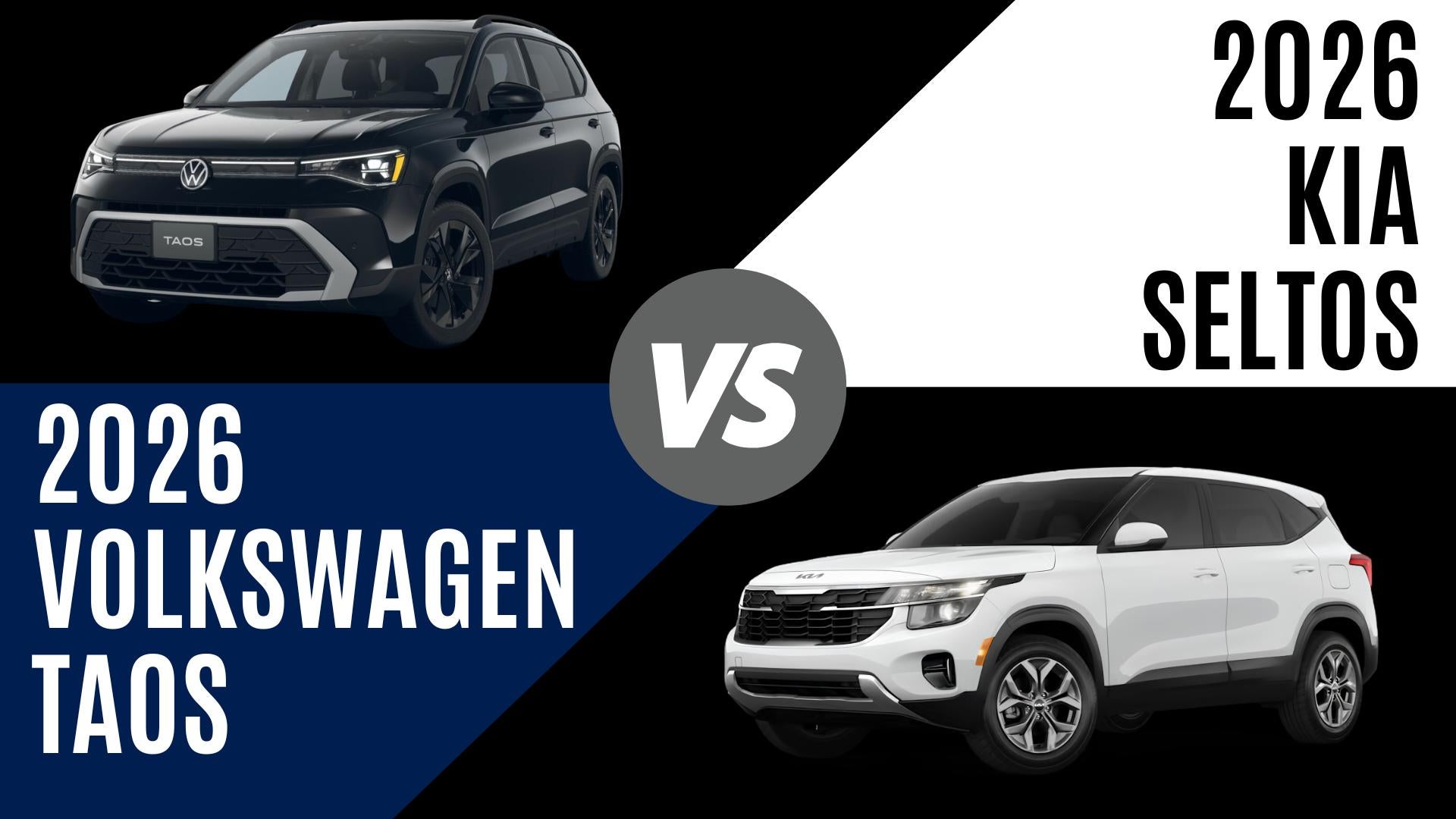
2026 Volkswagen Taos vs Kia Seltos in Fayetteville, AR

2026 Volkswagen Taos and Kia Seltos compared for technology, cargo space, fuel economy, and AWD capability in Fayetteville Arkansas

Finding the Right Small SUV for Life in Northwest Arkansas

Choosing a small SUV often means balancing efficiency, technology, passenger space, and long-term value. Whether you're commuting across Fayetteville, heading into Springdale for work, or loading up gear for a weekend around Northwest Arkansas, versatility matters.

The 2026 Volkswagen Taos and 2026 Kia Seltos both target drivers who want the practicality of an SUV without the size of a larger crossover. Each offers available all-wheel drive, modern safety technology, and flexible cargo space, but they take slightly different approaches to comfort, performance, and ownership.

Unlike many modern SUV comparisons, neither the 2026 Volkswagen Taos nor the 2026 Kia Seltos is offered with a hybrid powertrain. This comparison focuses exclusively on their traditional gasoline-powered models, making it easier to compare performance, efficiency, and everyday usability directly.

The Taos competes in one of the busiest SUV segments on the market, and comparing it against vehicles like the Honda HR-V and Subaru Crosstrek can provide additional perspective

Vehicle Comparison

2026 Volkswagen Taos
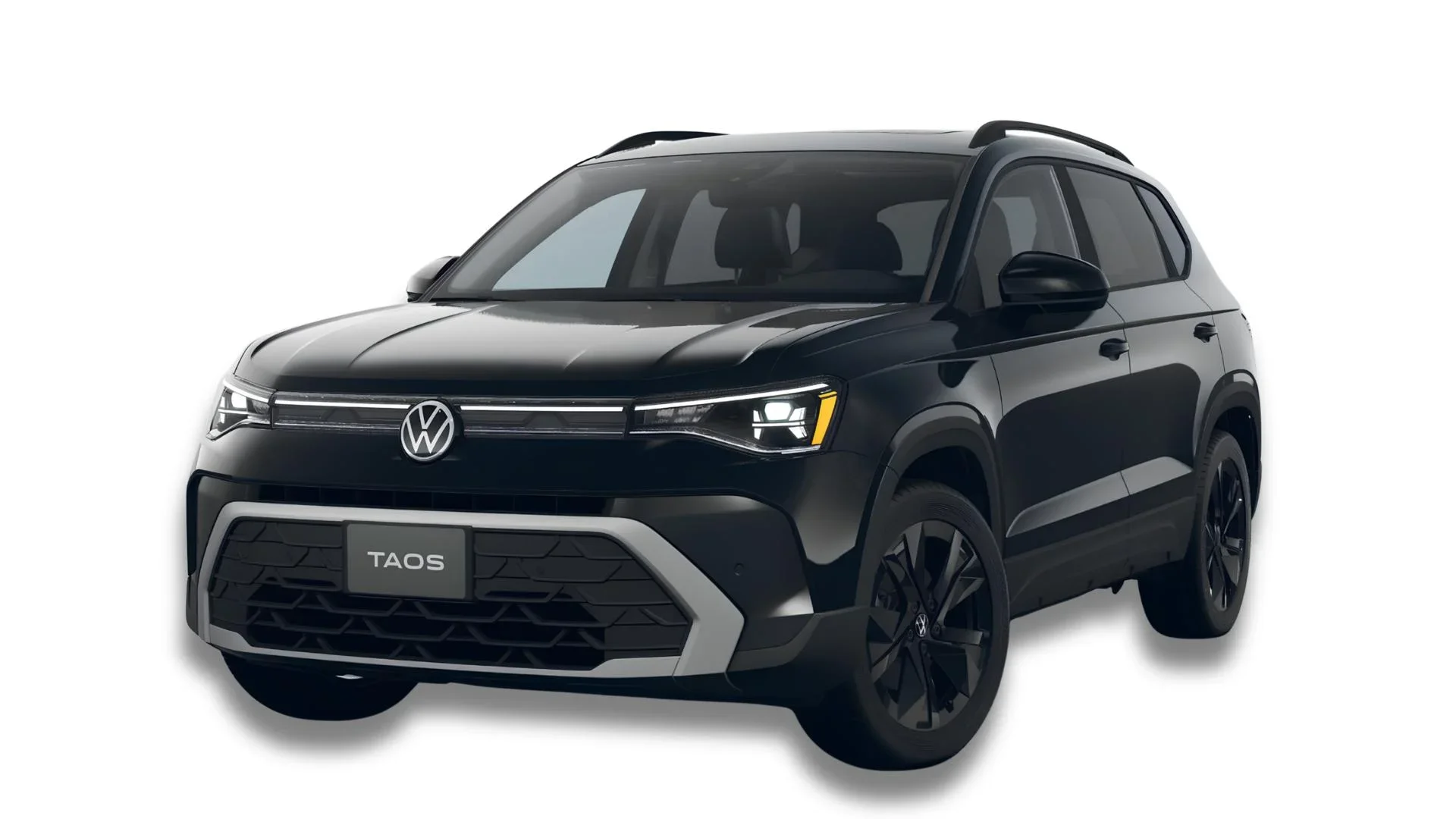
2026 Volkswagen Taos at Crain Volkswagen of Fayetteville
Horsepower
174 hp
AWD Availability
Available
Fuel Economy / Range
Up to 28/36 mpg (city/hwy)
Seating Capacity
5
Top Features
  • Digital Cockpit
  • Panoramic Sunroof
  • Heated & Ventilated Front Seats

2026 Kia Seltos
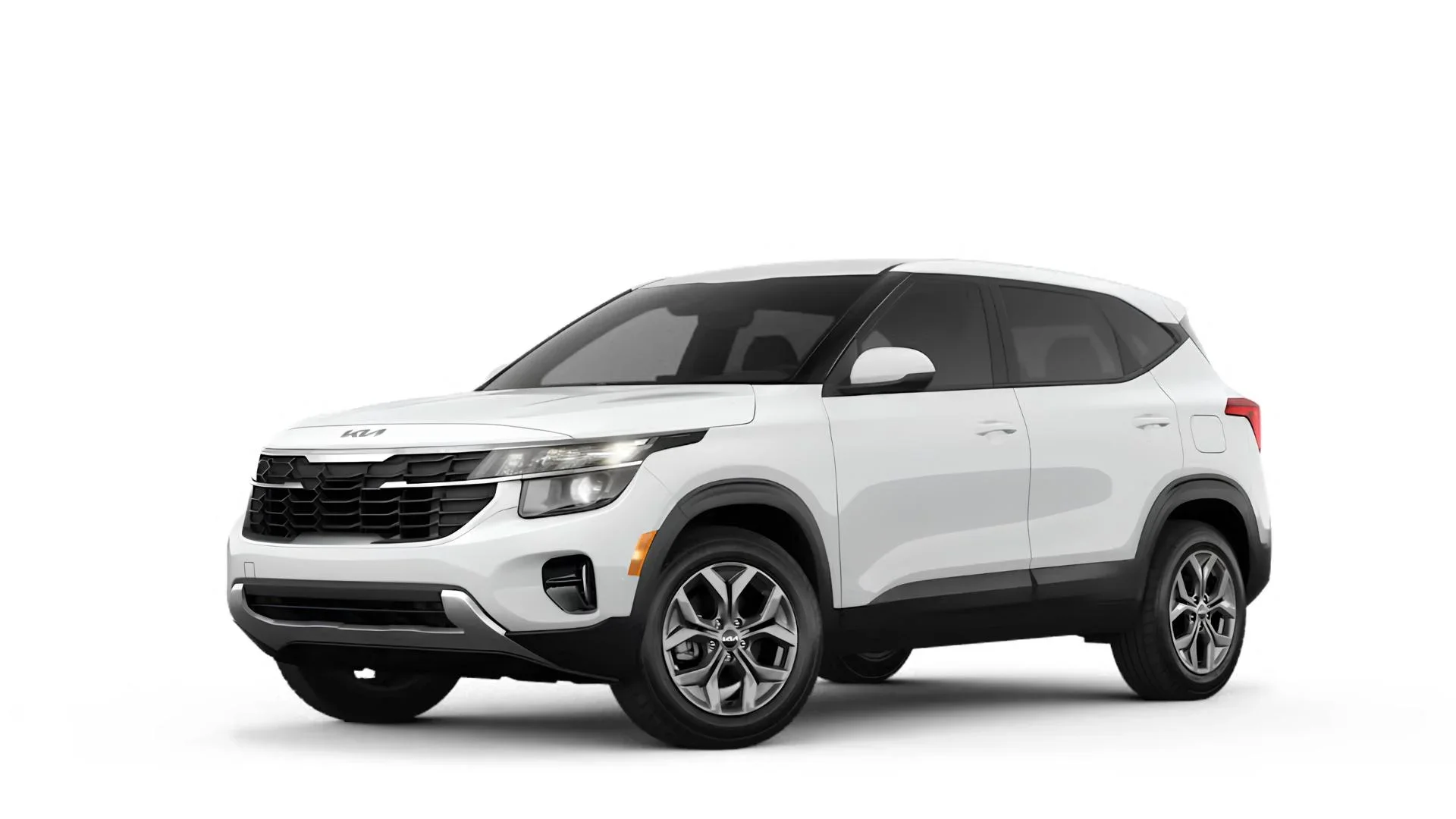
Kia Seltos at Crain Volkswagen of Fayetteville
Horsepower
146 hp (Standard), 190 hp (Turbo)
AWD Availability
Available
Fuel Economy / Range
Up to 27/31 mpg (city/hwy)
Seating Capacity
5
Top Features
  • Panoramic Display Panel
  • Adaptive Cruise Control
  • Interior Ambient Lighting

Distinct Styling with Different Personalities

These two SUVs make very different first impressions.

Volkswagen gives the Taos a clean, refined appearance that feels distinctly European. Inside, the design emphasizes simplicity, quality materials, and a sophisticated layout that feels more upscale than many vehicles in this segment.

Kia takes a more expressive approach with the Seltos. Its bold styling, available ambient lighting, and modern dashboard design help create a youthful and energetic character.

Neither approach is wrong. The choice largely comes down to whether you prefer understated refinement or a more attention-grabbing look.

Design Highlights

  • Taos: Sophisticated styling and upscale cabin design
  • Seltos: Bold exterior design with a youthful personality
  • Both: Compact SUVs designed for everyday versatility

Everyday Driving Comfort Around Fayetteville

A vehicle's personality becomes more apparent once you're behind the wheel.

The Taos uses a turbocharged 1.5-liter engine producing 174 horsepower and pairs it with an eight-speed automatic transmission. During everyday driving, the powertrain feels smooth and responsive, while the suspension delivers a composed ride.

Kia offers two engine choices in the Seltos. The standard engine focuses on efficiency, while the available turbocharged engine provides noticeably stronger acceleration. Drivers seeking extra performance may appreciate the available turbo option, especially during highway merging and passing. The turbocharged Seltos also delivers up to 190 horsepower, giving it a clear power advantage over the Taos for buyers who prioritize acceleration.

Volkswagen also continues to offer available 4MOTION all-wheel drive for drivers who want additional confidence during changing weather conditions. Drivers who regularly travel through changing weather conditions can learn more about how Volkswagen's 4MOTION all-wheel-drive system works.

Performance Highlights

  • Taos: 174-hp turbo engine with smooth automatic transmission
  • Seltos: Choice of two engines, including an available turbo option
  • Both: Available all-wheel drive

Interior Space and Practicality

Cargo space and passenger comfort often influence ownership satisfaction more than horsepower figures.

The Taos provides impressive rear-seat room for a vehicle in this class, along with a generous cargo area that makes grocery runs, road trips, and everyday errands easier to manage. Volkswagen's thoughtful packaging helps the cabin feel larger than many shoppers expect.

The Seltos also makes excellent use of its footprint. Passenger space is generous, and cargo flexibility remains one of its strengths. Interior materials feel surprisingly refined, particularly in upper trims.

Both vehicles work well for daily life, though the Taos offers a slight advantage in cargo capacity.

Interior Highlights

  • Taos: Spacious rear seating and generous cargo room
  • Seltos: Comfortable cabin with impressive space utilization
  • Both: Flexible interiors built for active lifestyles

Technology Designed for Modern Drivers

Technology has become one of the biggest differentiators in today's SUV market.

Every Taos includes a digital gauge cluster, giving drivers a modern display directly in front of the steering wheel. The infotainment system supports smartphone connectivity and can be equipped with navigation, wireless charging, and additional convenience features.

Volkswagen continues expanding technology across its lineup, with systems designed to make connectivity, infotainment, and driver assistance easier to use. Features like VW infotainment tools and IQ.DRIVE driver-assistance technology help support a more connected and confidence-inspiring drive.

The Seltos counters with an available panoramic display panel that combines digital information and infotainment into a single sleek housing. Apple CarPlay and Android Auto are standard, helping drivers stay connected while on the road.

Technology Highlights

  • Taos: Standard Digital Cockpit and available wireless charging
  • Seltos: Available panoramic display panel
  • Both: Smartphone connectivity and modern infotainment systems

Advanced Safety Features on Both SUVs

Modern driver-assistance technology has become an expectation rather than a luxury.

The Taos includes standard blind-spot monitoring, rear cross-traffic alert, adaptive cruise control with lane-centering capability, and automated emergency braking. These features are part of Volkswagen's broader commitment to driver confidence and accident prevention.

Kia equips the Seltos with its own suite of safety technologies, including automated emergency braking, lane-keeping assistance, and adaptive cruise control.

Volkswagen's driver-assistance technologies are designed to improve awareness and confidence behind the wheel.

Safety Highlights

  • Taos: Standard adaptive cruise control with lane-centering
  • Seltos: Comprehensive standard driver-assistance features
  • Both: Strong safety technology availability

Fuel Economy and Efficiency

Efficiency remains an important consideration for daily commuting.

The front-wheel-drive Taos is rated for up to 28 MPG city and 36 MPG highway, while all-wheel-drive models achieve up to 25 MPG city and 33 MPG highway. Those figures make the Taos one of the more efficient choices in its segment.

The Seltos delivers up to 27 MPG city, 31 MPG highway, and 29 MPG combined with its standard engine and available all-wheel drive. Turbocharged models prioritize performance slightly more than efficiency.

Both SUVs balance fuel economy and practicality effectively, though the Taos holds an advantage in highway efficiency.

Efficiency Highlights

  • Taos: Up to 36 MPG highway
  • Seltos: Competitive efficiency with available turbo performance
  • Both: Designed for economical daily driving

Ownership Value and Long-Term Considerations

Long-term ownership costs extend beyond fuel economy.

Volkswagen supports Taos owners with complimentary scheduled maintenance for two years or 20,000 miles. That coverage helps reduce routine ownership expenses during the first years of ownership.

Kia counters with one of the strongest warranty programs in the industry, including a 10-year/100,000-mile powertrain warranty. For many shoppers, that coverage provides significant peace of mind.

Each brand brings a different ownership advantage to the table.

Ownership Highlights

  • Taos: Complimentary scheduled maintenance
  • Seltos: Industry-leading powertrain warranty
  • Both: Strong value within the compact SUV segment

Which SUV Fits Fayetteville Drivers Best?

The Volkswagen Taos and Kia Seltos succeed in many of the same areas while appealing to slightly different priorities.

Drivers who value cargo space, highway fuel economy, refined design, and Volkswagen's European-inspired driving character may find the Taos especially appealing.

The Seltos stands out with its available turbocharged performance, excellent warranty coverage, and strong overall value proposition.

Both SUVs offer practical transportation, modern technology, available all-wheel drive, and comfortable accommodations for everyday life around Fayetteville, Springdale, Rogers, and Northwest Arkansas.

The right choice ultimately comes down to which combination of features, driving feel, and ownership benefits best matches your lifestyle.

FAQs

Which SUV has more cargo space?
The Volkswagen Taos offers slightly more cargo capacity, making it a strong choice for drivers who regularly haul gear, groceries, or luggage.

Does either SUV offer all-wheel drive?
Yes. Both the 2026 Volkswagen Taos and 2026 Kia Seltos offer available all-wheel drive.

Which SUV has the stronger warranty?
The Kia Seltos provides a longer powertrain warranty, with coverage extending to 10 years or 100,000 miles.
Posted in:

Related Posts

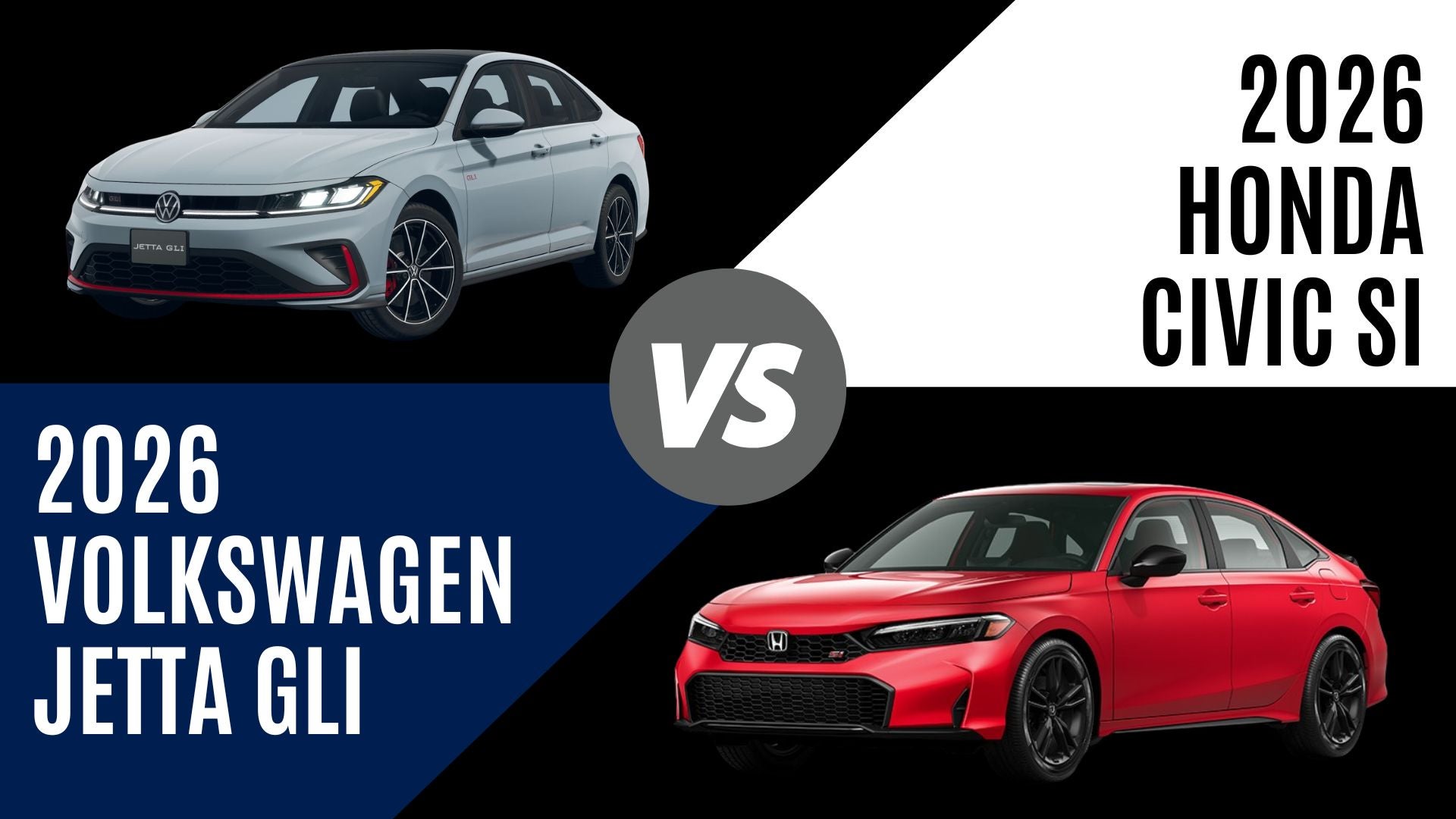
2026 Volkswagen Jetta GLI and 2026 Honda Civic Si sport compact sedans compared side by side for Fayetteville, Arkansas drivers

2026 Volkswagen Jetta GLI vs 2026 Honda Civic Si: Which Sport Sedan Fits Fayetteville Drivers?

Volkswagen has built a real following with the Jetta GLI, and it's easy to see why. The 2026 model takes the everyday Jetta and adds a turbocharged engine, adaptive dampers, and a genuinely fun driving character, all while keeping the comfort and practicality that make it easy to live with every day. Honda's Civic Si is a well-known name in the sport compact class, but the Jetta GLI holds its own with more power, more standard features, and real everyday versatility. Full details are available on the 2026 Volkswagen Jetta GLI research page. Vehicle Comparison 2026 Volkswagen Jetta GLI Horsepower 228 hp AWD Availability None Fuel Economy / Range 26/36 mpg (city/hwy) Seating Capacity 5 Top Features Heated & Ventilated Front Seat 10.3" Digital Gauge Cluster w/ Panoramic Sunroof Standard Adaptive Cruise Control, Blind-Spot Monitoring & Rear Cross-Traffic Alert Find Your Jetta GLI Today 2026 Honda Civic Si Horsepower 200 hp AWD Availability None Fuel Economy / Range 27/37 mpg (city/hwy) Seating Capacity 5 Top Features Sport Seats w/ Bolstering, Heating & Red Contrast Stitching 9" Touchscreen w/ 12-Speaker Bose Audio Standard Limited-Slip Differential w/ Rev-Match Manual Search Our Used Inventory Design and Cabin Character Volkswagen sharpens the standard Jetta into the GLI by adding a turbocharged engine, adaptive dampers, and a longer standard-features list that includes leather upholstery and heated and ventilated front seats. Curious how it stacks up against the regular Jetta? See what's the Difference Between the Jetta and the Jetta GLI? Sport seats with extra bolstering, red contrast stitching, and Si-specific badging set the Civic Si apart from the standard Civic sedan, giving Honda's take on the formula its own distinct personality. First Impressions: Jetta GLI: standard heated and ventilated front seats, plus leather upholstery Civic Si: bolstered sport seats with heating and distinctive red stitching Both: a sportier take on an already practical compact sedan Power and Performance A turbocharged 2-liter four-cylinder gives the Jetta GLI 228 horsepower and 258 pound-feet of torque, available with a six-speed manual or a seven-speed dual-clutch automatic. It reaches 60 mph in 6.0 seconds with the manual or 5.6 seconds with the automatic, which is quicker than the Civic Si's 6.6-second time. Owners who prefer rowing their own gears keep that option here, something not every rival in this class still offers. Honda's Civic Si brings a 200-hp turbocharged 1.5-liter engine paired exclusively to a six-speed manual with a standard limited-slip differential and a rev-match feature for smoother downshifts. Car and Driver's testing found it to be one of the best-driving compact sedans on the market, engaging enough to land a spot on the publication's 2026 10Best list. Performance Notes: Jetta GLI: more horsepower, more torque, and a quicker 0–60 time Civic Si: manual-only with a limited-slip differential, plus 2026 10Best recognition Jetta GLI offers a clear straight-line speed advantage, with the Si countering on driving engagement Interior Comfort and Cargo Inside, the Jetta GLI includes a 10.3-inch digital gauge cluster, customizable ambient lighting, and a panoramic sunroof, along with more rear-seat legroom than VW's own Golf GTI hatchback. Trunk space measures a generous 14.1 cubic feet, fitting seven carry-on suitcases, enough for a genuine weekend trip without leaving anything behind. Back-seat comfort in the Civic Si is consistent with that of the standard Civic sedan, since both share the same rear-seat dimensions. Its trunk holds six carry-on suitcases. Cargo Check: Jetta GLI: 14.1 cubic feet of trunk space, fitting seven suitcases Civic Si: six-suitcase trunk capacity, with comfortable rear-seat room Jetta GLI offers a modest cargo advantage Technology and Connectivity Standard on the Jetta GLI is an 8.0-inch touchscreen with wireless Apple CarPlay and Android Auto, a Wi-Fi hotspot, wireless device charging, and an eight-speaker stereo, giving every trim a solid baseline of connected features. Fayetteville drivers can see more of what VW builds into its current lineup in a broader look at the brand's tech features. A larger 9-inch touchscreen anchors the Civic Si's dashboard, also with wireless Apple CarPlay and Android Auto, plus a standard 12-speaker Bose audio system that outclasses most rivals at this price point. Connectivity Corner: Jetta GLI: standard Wi-Fi hotspot and wireless device charging Civic Si: larger touchscreen and a stronger standard 12-speaker Bose sound system Civic Si offers the edge on screen size and audio quality Safety and Driver-Assistance Features Adaptive cruise control, blind-spot monitoring, and rear-cross-traffic alert all come standard on the Jetta GLI, along with automatic high-beam headlights and lane-keeping assist. Fayetteville drivers can see how Volkswagen's safety approach compares more broadly in this side-by-side look at the brand. Honda brings its own strong suite of standard features to the Civic Si: forward-collision warning with automated emergency braking, lane-departure warning with lane-keeping assist, and adaptive cruise control. Safety Rundown: Jetta GLI: standard blind-spot monitoring and rear-cross-traffic alert Civic Si: standard forward-collision warning and automated emergency braking Both: standard adaptive cruise control and lane-keeping assist Fuel Economy and Value Fuel economy leans slightly toward the Civic Si, rated at 27 mpg city and 37 mpg highway, matching its EPA highway estimate in real-world testing. The manual Jetta GLI earns 26 mpg city and 36 mpg highway, dropping slightly to 35 mpg highway with the automatic, which also matched its EPA rating in real-world testing. Between the two, the Civic Si delivers modestly better fuel economy across the board, while the Jetta GLI counters with more power and the flexibility of choosing between a manual or automatic transmission. Ownership Value Volkswagen backs the Jetta GLI with a four-year, 50,000-mile limited and powertrain warranty, plus two years or 20,000 miles of complimentary maintenance. Fayetteville shoppers can review the full breakdown in Crain VW's warranty overview. Honda's coverage on the Civic Si includes a three-year, 36,000-mile limited warranty, a five-year, 60,000-mile powertrain warranty, and one year or 12,000 miles of complimentary maintenance. Warranty Breakdown: Jetta GLI: double the complimentary maintenance coverage Civic Si: longer powertrain warranty, but shorter limited warranty and maintenance terms Coverage is genuinely mixed, with each vehicle ahead in a different category Why the Jetta GLI Deserves a Look in Fayetteville More power, more standard comfort and safety features, and more complimentary maintenance coverage make the Jetta GLI a strong pick in the sport sedan class, while the Civic Si counters with better fuel economy and a stronger standard audio system. For Fayetteville drivers who want a quicker, more feature-loaded sport sedan without sacrificing daily comfort, the Jetta GLI is an excellent choice. Stop by Crain Volkswagen of Fayetteville to see it in person and compare trims and financing options. FAQs Is the Jetta GLI faster than the Civic Si? Yes, the Jetta GLI reaches 60 mph in as little as 5.6 seconds with the automatic transmission, ahead of the Civic Si's 6.6-second time. Does the Civic Si offer better fuel economy than the Jetta GLI? Yes, the Civic Si is rated at 37 mpg highway, slightly ahead of the manual Jetta GLI's 36 mpg highway rating. Can I get the Jetta GLI with an automatic transmission? Yes, the Jetta GLI offers a seven-speed dual-clutch automatic alongside its standard six-speed manual, while the Civic Si is available exclusively with a manual transmission.

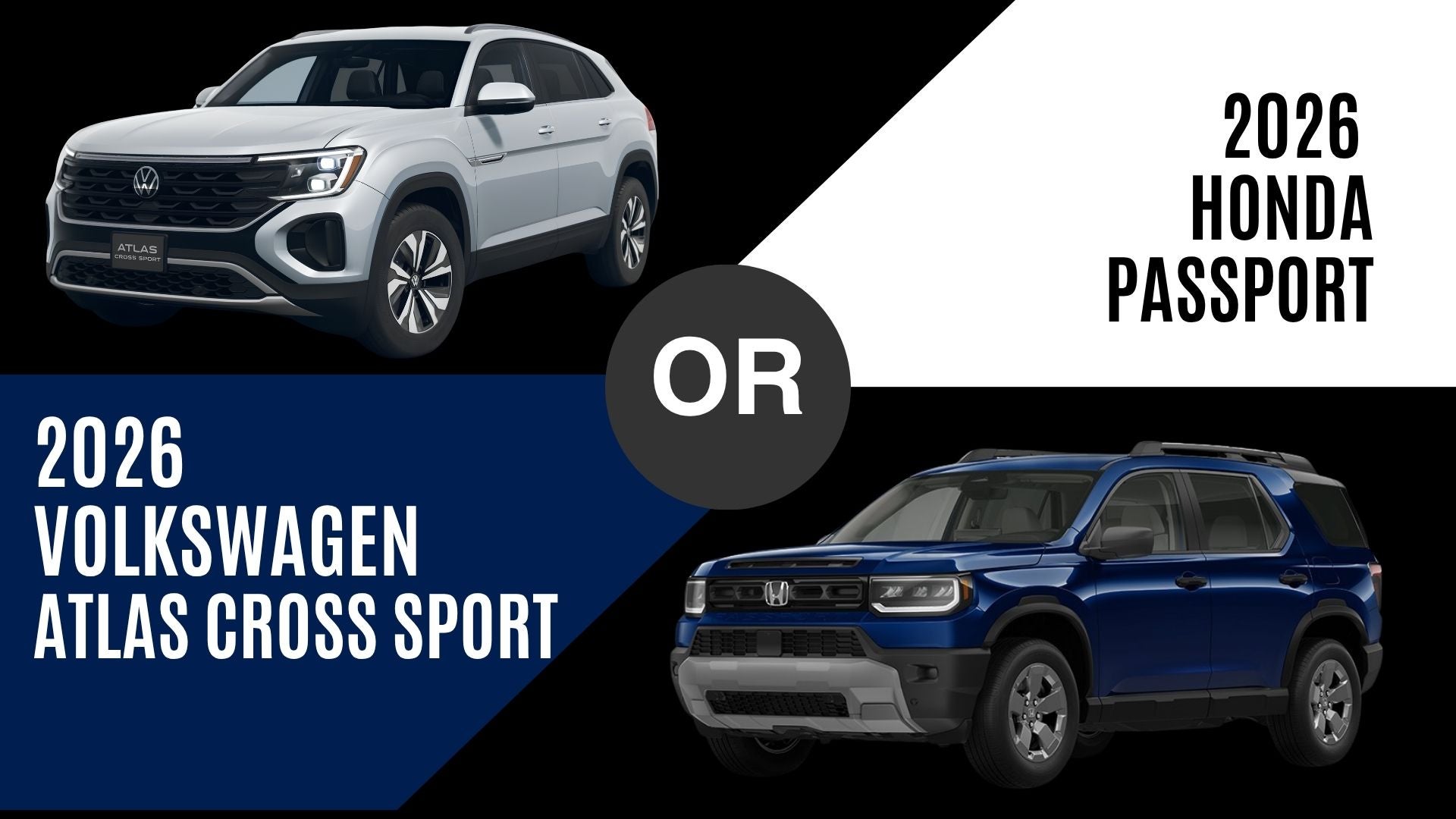
2026 Volkswagen Atlas Cross Sport and 2026 Honda Passport midsize SUVs compared side by side for Fayetteville, Arkansas drivers

2026 Volkswagen Atlas Cross Sport vs 2026 Honda Passport: Which Two-Row SUV Fits Fayetteville Drivers?

Volkswagen has been building genuinely great SUVs for years, and the 2026 Atlas Cross Sport is a perfect example of why more Fayetteville drivers should take a look. It offers a sleek, sporty profile, a comfortable, well-equipped cabin, and the kind of everyday refinement that makes daily driving enjoyable. While Honda's Passport is a popular pick in the two-row SUV class, the Atlas Cross Sport holds its own as a stylish, capable alternative worth serious consideration. Full details are available on the 2026 Volkswagen Atlas Cross Sport research page. Vehicle Comparison 2026 Volkswagen Atlas Cross Sport Horsepower 269 hp AWD Availability Standard Fuel Economy / Range 20/27 mpg (city/hwy) Seating Capacity 5 Top Features Tri-Zone Climate Control Heated & Ventilated Front Seats Wireless CarPlay/Android Auto w/ 6 USB-C Ports Towing Capacity 2,000 lbs (SE)/5,000 lbs (SEL w/ Technology & above) Find Your Atlas Cross Sport Today 2026 Honda Passport Horsepower 285 hp AWD Availability Standard Fuel Economy / Range 19/25 mpg (city/hwy) Seating Capacity 5 Top Features Standard Adaptive Cruise Control Power-Adjustable & Heated Front Seats 12.3" Touchscreen w/ Wireless CarPlay & Android Auto Towing Capacity 5,000 lbs Search Our Used Inventory Design and Everyday Refinement Volkswagen gave the Atlas Cross Sport a sloping roofline and sportier stance compared to the standard Atlas, trading some cargo room for a more expressive look. Standard cabin comfort is where it really shines: heated and ventilated front seats, a heated steering wheel, and tri-zone climate control all come included, backed by soft-touch materials and adjustable ambient lighting that Wards recognized as some of the best in the class, a distinction covered in the Atlas Cross Sport's recent recognition. Honda took a different route with its redesigned 2026 Passport, leaning into a rugged, trail-ready appearance with a stiffer chassis and beefed-up suspension. Styling and Comfort Snapshot: Atlas Cross Sport: standard heated and ventilated front seats, plus tri-zone climate control Passport: rugged, trail-focused exterior with a stiffer, more capable chassis Both: distinctive styling that sets them apart from class default Power and Driving Character A turbocharged 2-liter four-cylinder powers the Atlas Cross Sport with 269 horsepower, delivering a comfortable, quiet ride with all-wheel drive standard on most trims and available on the base SE. Honda counters with a 3.5-liter V-6 making 285 horsepower in the Passport, paired with a new 10-speed automatic and Honda's i-VTM4 torque-vectoring all-wheel-drive system standard across the lineup. Early impressions describe it as capable off-road and refined on-road, and it earned a spot on Car and Driver's 2026 10 Best list. Behind the Wheel: Atlas Cross Sport: comfortable, quiet ride with a smooth turbocharged four-cylinder Passport: more power, standard torque-vectoring AWD, and a 2026 10Best nod Atlas Cross Sport prioritizes comfort, while the Passport offers more outright power Interior Space and Cargo Total passenger volume in the Atlas Cross Sport measures 112 cubic feet, with a cargo hold that fits 14 carry-on suitcases behind the second row and expands to 30 with the seats folded. A longer wheelbase gives the Passport real rear-seat legroom gains over its previous generation, and its cargo area edges out the Atlas Cross Sport, fitting 16 suitcases behind the rear seat and 38 with the seats folded. Cargo and Comfort Breakdown: Atlas Cross Sport: 112 cubic feet of total passenger volume Passport: more suitcase capacity, both behind the seats and with them folded Technology and Connectivity A 10.3-inch digital gauge cluster and 12.0-inch infotainment display anchor the Atlas Cross Sport's dashboard, joined by wireless Apple CarPlay and Android Auto, six USB-C ports with an optional eight-port configuration, wireless charging, and a 4G LTE Wi-Fi hotspot. Honda answers with a 10.2-inch instrument cluster and a larger 12.3-inch touchscreen in the Passport, along with wireless Apple CarPlay and Android Auto, a 5G-LTE hotspot, wireless charging, and a three-year complimentary unlimited data plan through Google Play services. Tech Rundown: Atlas Cross Sport: more total USB-C ports, with an optional eight-port setup Passport: larger touchscreen and faster 5G-LTE connectivity, plus complimentary data Both: wireless smartphone connectivity and onboard Wi-Fi standard Safety and Driver-Assistance Features Standard automated emergency braking, lane-centering, and blind-spot monitoring come built into the Atlas Cross Sport's IQ.Drive suite. It comes with adaptive cruise control and a head-up display available on higher trims. Every Passport trim includes Honda Sensing standard, covering automated emergency braking with pedestrian detection, blind-spot monitoring with rear cross-traffic alert, and adaptive cruise control. Safety Stand-Outs: Atlas Cross Sport: adaptive cruise control available on higher trims Passport: standard adaptive cruise control across every trim Both: standard automated emergency braking and blind-spot monitoring Towing, AWD, and Fuel Economy Factory-hitch towing on the Atlas Cross Sport reaches 5,000 pounds on SEL with Technology trim and above, starting at 2,000 pounds on the base SE. Fayetteville drivers hauling gear or a trailer can see how it stacks up against the competition in a broader look at capable options. Every Passport trim tows up to 5,000 pounds as standard equipment. Fuel economy tips toward the Atlas Cross Sport, rated at 20 mpg city and 27 mpg highway with front-wheel drive, or 20 mpg city and 26 mpg highway with all-wheel drive, compared to the Passport's 19 mpg city and 25 mpg highway with its standard all-wheel-drive system. Towing and Efficiency Snapshot: Atlas Cross Sport: better fuel economy across the board Passport: higher towing capacity as standard equipment, not trim-gated Both: real capability, just prioritized differently Ownership Value A four-year, 50,000-mile limited and powertrain warranty backs the Atlas Cross Sport, plus two years or 20,000 miles of complimentary maintenance. Honda's coverage on the Passport includes a three-year, 36,000-mile limited warranty, a five-year, 60,000-mile powertrain warranty, and one year or 12,000 miles of complimentary maintenance. Fayetteville buyers can review the specifics in Crain VW's warranty overview. Coverage Comparison: Atlas Cross Sport: double the complimentary maintenance coverage Passport: longer powertrain warranty, but shorter limited warranty and maintenance terms Coverage is genuinely mixed, with each vehicle ahead in a different category Why the Atlas Cross Sport Deserves a Look in Fayetteville A refined, comfortable cabin, strong fuel economy, and dependable maintenance coverage make the Atlas Cross Sport a standout in the two-row SUV class, while the Passport leans into extra power and off-road-ready capability. For Fayetteville drivers who want comfort, efficiency, and everyday polish, the Atlas Cross Sport is an excellent choice. Stop by Crain Volkswagen of Fayetteville to see it in person and compare trims and financing options. FAQs Does the Passport have more power than the Atlas Cross Sport? Yes, the Passport's 285-hp V-6 outperforms the Atlas Cross Sport's 269-hp turbocharged four-cylinder. Which SUV offers better fuel economy, the Atlas Cross Sport or the Passport? The Atlas Cross Sport is rated up to 27 mpg highway, ahead of the Passport's 25 mpg highway rating with standard all-wheel drive. Is adaptive cruise control standard on both SUVs? Adaptive cruise control is standard on every Passport trim, and it's available on higher Atlas Cross Sport trims.

2026 Volkswagen ID.4 and Hyundai IONIQ 5 electric SUVs compared side by side for drivers in Fayetteville, Arkansas

2026 Volkswagen ID.4 vs Hyundai IONIQ 5 in Fayetteville, AR

Entry-Level Electric SUVs Worth Considering Going electric doesn't mean starting at the top of the price range, and the 2026 Volkswagen ID.4 and 2026 Hyundai IONIQ 5 both prove it. Both compact electric SUVs bring genuine range, modern technology, and everyday practicality to Fayetteville drivers at their entry-level trims, well below what pricier EV competitors often charge. This comparison anchors around each vehicle's entry-level configuration, the ID.4 Pro and the IONIQ 5 SE Standard Range, since that's where most shoppers start when comparing these two lineups. Vehicle Comparison 2026 Volkswagen ID.4 Horsepower 282 hp AWD Availability Available Fuel Economy / Range 291 EPA-estimated Seating Capacity 5 Top Features 12.9" Touchscreen with Backlit Sliders Predictive Adaptive Cruise Control Standard Navigation Towing Capacity Up to 2,700 lbs (AWD trims) Find Your ID.4 Today 2026 Hyundai Ioniq 5 Horsepower 168 hp AWD Availability Available Fuel Economy / Range 245 EPA-estimated Seating Capacity 5 Top Features 12.3" Touchscreen with Navigation 12.3" Digital Instrument Cluster Ultra-Fast Charging Capability Towing Capacity Up to 2,700 lbs (AWD XRT w/factory hitch) Search Our Used Inventory Two Different Design Philosophies Proportions borrowed from the gas-powered Tiguan give the ID.4 a familiar, approachable shape, spacious without looking unusual in a parking lot full of traditional SUVs. It's part of why the ID.4 has earned recognition as an award-winning EV that balances practicality with genuine capability. The IONIQ 5 takes the opposite approach, wearing its electric identity proudly with a distinctly futuristic silhouette and pixel-inspired lighting details that immediately stand out. Buyers who want their EV to look like an EV tend to gravitate toward this option. First Look: ID.4: Familiar, Tiguan-inspired proportions built around comfort IONIQ 5: Distinctly futuristic styling with pixel-inspired lighting Both: Genuinely spacious cabins for the compact SUV class Power and Range Across the Lineup Entry-level pricing doesn't mean entry-level power on the ID.4 side. The Pro trim's single rear motor makes 282 horsepower and reaches an EPA-estimated 291 miles of range, a strong starting point for the segment. Stepping up to AWD dual-motor trims bumps output to 335 horsepower, though range settles to 263 miles. The IONIQ 5 SE Standard Range starts more modestly, with a 168-hp single motor paired with a smaller battery for 245 miles of range. Moving up to the SE, SEL, or Limited trims with the larger battery unlocks 225 hp and up to 318 miles in RWD form, or 320 hp with AWD. Under the Hood: ID.4: 282-hp entry trim, 291-mile range; up to 335 hp with AWD IONIQ 5: 168-hp entry trim, 245-mile range; up to 320 hp with AWD and larger battery Both: Meaningful range and power gains available by moving up the lineup Charging and Everyday Range Both SUVs use a similarly sized battery pack at their core, a 77.0-kWh unit in the ID.4 and a 63.0-kWh (standard) or 84.0-kWh (long-range) pack in the IONIQ 5, and both support DC fast-charging for road trips or quick top-offs. The IONIQ 5's larger battery can recover 10 to 80 percent charge in around 20 minutes on a DC fast-charger, and Hyundai claims 68 miles of range in about 5 minutes, a figure Car and Driver confirmed in testing. The ID.4 offers its own fast-charging capability through Electrify America's Plug&Charge technology, which lets the car authenticate and start charging automatically without tapping an app or card. Real-world highway range testing landed at 240 miles for the AWD Pro S. Charging Notes: ID.4: 77.0-kWh battery, DC fast-charging capable IONIQ 5: 63.0 or 84.0-kWh battery options, roughly 20-minute fast charge to 80% Both: Home charging compatible on standard 110V/240V connections Interior Comfort and Cargo Uncluttered and functional describes the ID.4's cabin well, with standard heated cloth seats and a 60/40 fold-flat second row for added cargo flexibility. Moving up to the Pro S adds 12-way power-adjustable front seats with memory and faux-leather upholstery. The IONIQ 5 counters with a genuinely spacious interior of its own, helped by a flat floor and a wheelbase longer than the three-row Palisade's. Cargo space runs 30 cubic feet behind the rear seats and 59 cubic feet with them folded, and sustainable materials appear throughout the cabin. Cabin Notes: ID.4: Standard heated cloth seats, fold-flat second row IONIQ 5: 30–59 cubic feet of cargo space, sustainable interior materials Both: Genuinely roomy cabins for the class Technology That Keeps Drivers Connected A 12.9-inch touchscreen anchors the ID.4's dashboard, paired with a 5.3-inch digital gauge display, standard navigation, and wireless Apple CarPlay and Android Auto across the lineup. The IONIQ 5 pairs a 12.3-inch touchscreen with a matching 12.3-inch digital gauge cluster, plus wireless Apple CarPlay and Android Auto standard on every trim except the base SE. Wireless device charging comes standard on the SEL and higher. Tech Rundown: ID.4: 12.9-inch touchscreen, 5.3-inch digital gauge cluster, standard navigation IONIQ 5: 12.3-inch touchscreen, 12.3-inch digital gauge cluster Both: Wireless Apple CarPlay and Android Auto (most trims) Safety Systems Built for Confidence Standard automated emergency braking with pedestrian detection, lane-departure warning with lane-keeping assist, and adaptive cruise control come on every ID.4 trim, backed by a Top Safety Pick award from IIHS. The IONIQ 5 matches that with standard adaptive cruise control, lane-keeping assist, and automated emergency braking with pedestrian detection across the lineup, while Highway Driving Assist 2 becomes available starting on the SEL trim for added highway confidence. Safety Snapshot: ID.4: Standard adaptive cruise control and lane-keeping assist IONIQ 5: Standard driver-assistance suite, available Highway Driving Assist 2 (SEL and up) Both: IIHS-recognized safety performance Towing and Practical Capability Both SUVs offer surprisingly similar towing figures for the segment. The ID.4 is rated to tow up to 2,700 lbs, while the IONIQ 5 matches that number on its AWD XRT trim. Hyundai doesn't recommend towing with rear-wheel-drive models and only endorses the AWD XRT when equipped with the factory hitch. Capability Notes: ID.4: Up to 2,700 lbs towing across AWD trims IONIQ 5: Up to 2,700 lbs towing, limited to the AWD XRT trim with factory hitch Both: Meaningful towing capability for a compact electric SUV Ownership Value Over Time Volkswagen backs the ID.4 with a 4-year/50,000-mile limited and powertrain warranty, plus 8 years or 100,000 miles of battery coverage and 2 years or 20,000 miles of complimentary maintenance. Hyundai's coverage on the IONIQ 5 runs longer in a couple of key areas: a 4-year/60,000-mile limited warranty, 4-year/70,000-mile powertrain warranty, and a notably longer 3 years or 45,000 miles of complimentary maintenance. Value Points: ID.4: 8-year/100,000-mile battery coverage, 2 years of complimentary maintenance IONIQ 5: 3 years of complimentary maintenance, slightly longer limited and powertrain coverage Both: Backed by established manufacturer support Which Entry-Level EV SUV Fits Your Life in Fayetteville? Both the ID.4 and IONIQ 5 make a genuinely strong case for going electric without moving up into pricier trims or premium competitors. Drivers who want a more traditional SUV shape, stronger entry-level horsepower, and Volkswagen's driving character may find the ID.4 lines up well with their priorities. Others drawn to a bolder design, faster charging on the larger battery, and slightly longer maintenance coverage may lean toward the IONIQ 5 instead. Either way, drivers throughout Fayetteville, Springdale, Rogers, and Bentonville can explore both options at Crain Volkswagen of Fayetteville, a genuinely capable starting point into electric SUV ownership. FAQs Q: Which EV SUV has more range at its base trim, the ID.4 or IONIQ 5? A: The ID.4 Pro offers an EPA-estimated 291 miles of range at its entry trim, notably more than the IONIQ 5 SE Standard Range's 245 miles, though both extend further with upgraded battery options. Q: Do both SUVs support fast charging? A: Yes, both the ID.4 and IONIQ 5 support DC fast-charging, with the IONIQ 5's larger battery capable of a 10-to-80-percent charge in around 20 minutes. Q: Which SUV offers longer complimentary maintenance coverage? A: The IONIQ 5 includes 3 years or 45,000 miles of complimentary maintenance, compared to 2 years or 20,000 miles on the ID.4.