Blog / Fayetteville Volkswagen Dealer

Blog

All Fayetteville Volkswagen Dealer Crain VW of Fayetteville Fayetteville Volkswagen Service Fayetteville Used Cars Volkswagen Safety Features Volkswagen Warranty Volkswagen Finance Awards VW Tech Features News Eco Friendly VW Fayetteville Auto Lease Vehicle Comparison 2026 New Volkswagen Community
headlight-2459090_960_720

Does Your Volkswagen Need New Headlights?

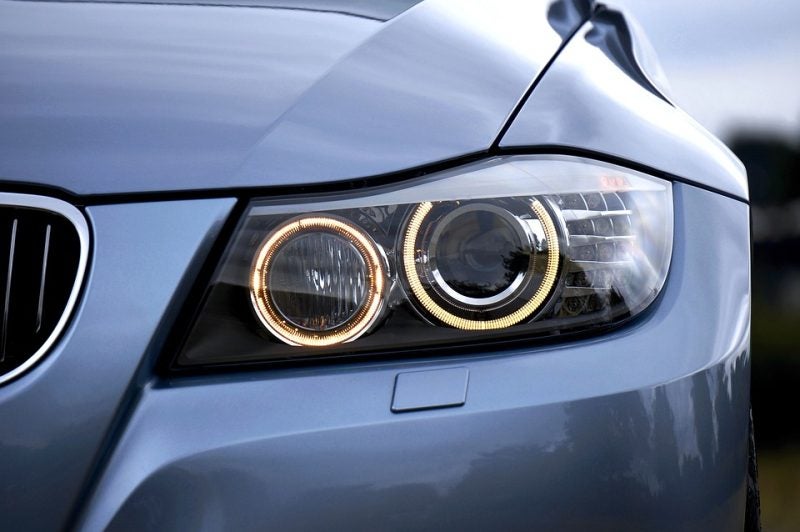
The last thing you needs is to suddenly not have enough light to see the road ahead, especially at night or in bad weather conditions. Failing headlights that don't work properly will severy impair your vision. Below are signs from your VW dealer that warn you when your Golf, Jetta, or Taos needs new headlights. Does Your Volkswagen Need New Headlights From Your VW Dealer? Your Headlights Are Dim and Fade When headlight bulbs are old, they grow dimmer and slowly start to fade until they don't provide enough light for you to see the road ahead clearly. When your car's headlights have lost their luster and are not shining as brightly as they used to, it's time to start thinking of replacing the bulbs. You can also check if the dimness is not due to dirty or damaged headlight covers blocking the light. If you've replaced the bulbs and the light is still dim, it could be due to a wiring issue. Ask your Volkswagen technician to inspect your headlights to determine what is causing the problem. Your Headlights Are Flickering Headlights randomly flicker on and off when the bulb filament is damaged or worn, and the bulb is on its way out. Get the headlight bulb replaced as soon as possible before it burns out completely. When headlights flicker, it doesn't always mean you need to get a new bulb. The flickering can also be due to a faulty battery connection, socket, or bad harness that your Volkswagen technician will expertly repair. One of Your Headlights Is Out When one headlight bulb is out, it's a sure sign that it's time to replace both bulbs. Usually, headlight bulbs are replaced in pairs, and when one burns out, the other one has already started to dim, and it won't be long before it also burns out. Replace both bulbs as soon as possible to ensure you get an even spread of light and better visibility at night and in inclement weather. You Have High Beam Problems If your low beams work perfectly but not your high beams, it could be due to a burnt-out bulb, a blown fuse, or a wiring issue. If you've replaced the bulbs, checked the fuses, and the high beams are still not working, your Volkswagen technician will quickly sort out the problem. You Are Frequently Replacing Bulbs If you change your headlight bulbs frequently, there might be a corroded socket or a loose connection. Ask your Volkswagen technician to inspect your headlights and determine what is causing the problem. Your Are Struggling With Blown Fuses Headlights that continue to cause problems and constantly burn out and hassles with blown fuses are symptoms of an electrical issue. Your Volkswagen technician must thoroughly inspect your car's electrical system to repair the problem. If you have problems with your car's headlights, stop at Crain Volkswagen of Fayetteville today. The skilled Volkswagen technicians will sort out your headlight issues fast and effectively. Image via pixabay.com by AutoPhotography
battery electrical 4a485308-f6cc-42b0-8a09-de8c5d6e0a20

5 Signs Your VW Is Having Electrical Problems

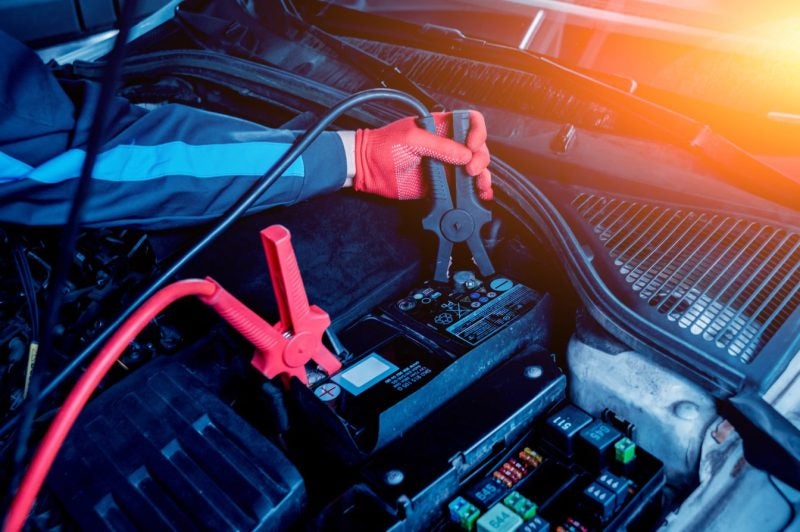
Your car's electrical system consists of a battery, a starter, and an alternator and powers the ignition system, components, and accessories. If one of these parts malfunctions or breaks, you'll experience a whole lot of car issues. Below are five signs from your VW dealer that your Volkswagen Jetta, Golf, or Atlas is having electrical problems. 5 Signs From Your VW Dealer That Your VW Is Having Electrical Problems 1. Dim Headlights One of the first signs of an electrical issue is dim headlights. Your battery powers your headlights, and when your battery is weak, your headlights will seem dimmer than usual, go from bright to dim when you accelerate, or flicker on and off. You'll also notice that your dashboard lights are not as bright as they used to be. 2. Battery Trouble The battery is the heart of your car's electrical system, and a weak battery near the end of its life will cause an array of vehicle issues. There won't be sufficient power to charge the engine, and suddenly all the electronics will start acting up. You'll have problems with your power windows and locks, the windshield wipers and heated seats, and some of your car's accessories might not work at all. 3. Cranking Issues Your battery is not the only thing that starts your car. The starter and the alternator are also part of the electrical system. If either of these components fails or breaks, your engine won't crank when you turn the key in the ignition. If there's a problem with the starter, you'll hear a clicking sound, and when the alternator malfunctions, you'll hear a whirring sound. 4. Blown Fuses Blown fuses will usually cause a minor electrical issue. Your interior lights or radio will suddenly stop working, some climate control features will not function properly, or your horn won't honk. A malfunctioning alternator that's overloading the circuits will blow a fuse. If you have hassles with blown fuses and continuously replacing them, there's a problem with the electrics, and it's best to ask your Volkswagen technician to repair the issue. 5. Burning Odor Your car's electrical system is a maze of wiring that runs through your vehicle. Smelling burning plastic insulation is a serious problem that will get worse and could cause severe damage. The odor could come from an overheated wire. It's best not to take unnecessary risks and schedule an appointment with your Volkswagen technician as soon as possible for repairs. If your headlights are dim or flicker, you struggle with your car's electronics, or it's hard to start your vehicle, don't stress. Stop at Crain Volkswagen of Fayetteville today, and our qualified Volkswagen technicians will quickly and effectively sort out your car's electrical issues and get you back on the road in no time at all.

c8c0d366-2e4d-4371-ae9a-6afdcd0aa013

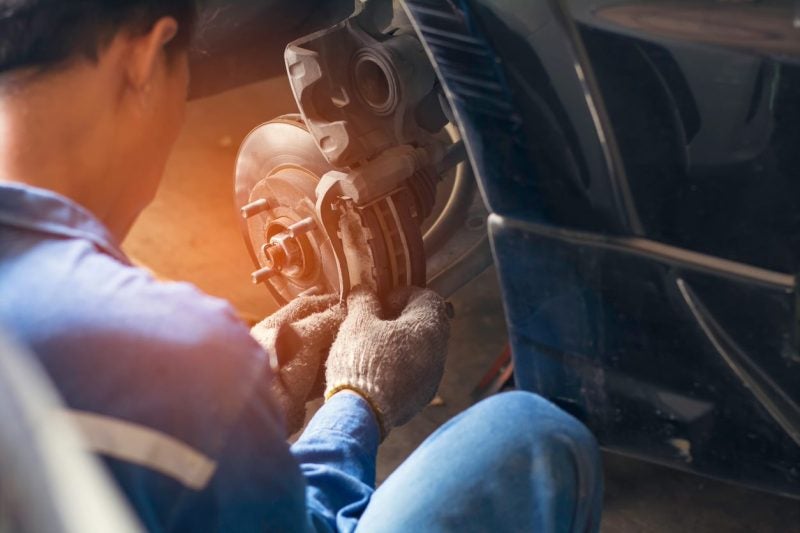
6 Benefits of Getting Routine Brake Service at Your VW Dealer

Scheduling your car's routine brake service is essential to ensure it operates at its peak level. Bring your car to your local VW dealer and check this vital task off your to-do list. 6 Benefits of Getting Routine Brake Service at Your VW Dealer 1. Save on Costly Repairs Car maintenance can be costly, but car repair can be brutal on your bank account. Don't wait for an emergency only to find yourself paying a large lump sum to get back on the road. Preventative service not only ensures a safer ride, but it also minimizes the accumulative and pricey damage caused by faulty brakes. 2. A Quieter Drive Whether you're driving in a busy and bustling city environment or taking the rural route, loud and distracting noises can ruin any ride. Maintained brakes provide a smoother drive, so get your brakes serviced to guarantee a quieter, calmer drive without intrusive background noise. 3. Safer Driving Experience Nothing trumps safety when it comes to driving. But not every driver lives that philosophy. Braking effectively during crucial moments could save your life, and the lives of others, but many drivers put off for tomorrow what could be done today. Take control of your safety and have a Volkswagen technician review your brakes to ensure a safe driving experience. 4. Increased Fuel Efficiency In our growing eco-conscious world, fuel efficiency is on many drivers' minds. With proper maintenance, your brakes work efficiently, so less energy is exerted by your car to brake when needed. This means that less fuel is used as you drive. Not only is this green-minded approach beneficial to the environment, it's kinder to your wallet when you fuel up. 5. Better Resale Prospects Without maintenance, a faulty brake system can wreak havoc on other components of your car, leading to depreciation in its value. This can cause trouble for you in the future when you want to sell your car to upgrade to a newer VW model. With regular servicing, you get the relevant documentation to prove you've been maintaining your car's overall health, easing future buyers' worries when it comes time to sell. 6. Meets Inspection Regulations Driving with bad brakes isn't just dangerous, it might be illegal. Without working brake pads and discs, your car isn't likely to pass inspection, meaning you could be breaking the law when you take your car out. Keep your brakes in good shape to avoid any costly fines or dangerous driving scenarios. While the do-it-yourself approach might be tempting when it comes to checking your own brakes, it's best to leave it to the professionals. Save yourself the hassle and visit Crain Volkswagen today to talk to a skilled VW technician about servicing your brakes.

1c0f5f3a-3a8d-45db-b9d4-4a1e6a03b627

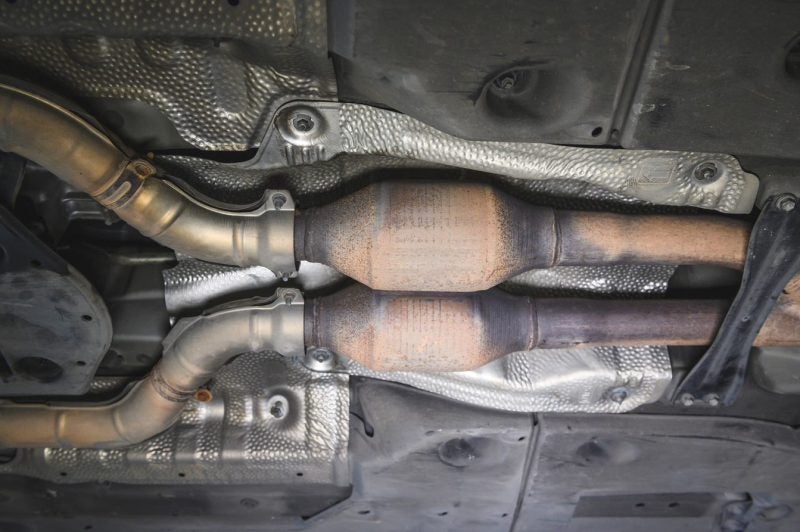
Does Your VW Need a New Catalytic Converter?

Responsible for breaking down your car's harmful emissions into neutral compounds, your catalytic converter is essential to the environment. However, it's also critical for the smooth running of your car, as a malfunction can affect the intake of air into the engine, and the efficient use of fuel. Read on for some of the signs that you need to ask your VW dealer about a converter replacement. Do You Need to Contact Your VW Dealer About a New Catalytic Converter? Previous Problems Converters can last for over ten years, but they can also become clogged and damaged. There are a number of engine faults that can have a knock-on effect on the exhaust system, such as misfiring spark plugs, faulty valves that lead to engine oil or coolant leaks, or a sharp blow to the underside of the vehicle. If you know that your car has suffered from any of these problems recently, it's sensible to get the converter checked out. Rattling Sounds The converter, or "cat" as it can be known, is covered in tiny pores, rather like a honeycomb. These are coated in platinum, palladium, and other precious metals that are used in the catalysing process. However, if it is damaged, pieces can break off and infiltrate the exhaust system. This may lead to a rattling sound underneath the car. Bad Smells One of the chemicals in fuel that should be catalysed by the converter is hydrogen sulfide. This is usually broken down into sulfur dioxide, which has no odor. However, if the cat is clogged or malfunctioning, unburnt fuel might enter the exhaust system and this can produce an unpleasant sulfuric scent, similar to rotten eggs. A malfunctioning converter might also cause a smell of burning or thick black smoke from the exhaust. Not only will this make the drive less pleasant, but it's also a sign that your exhaust system needs a diagnostic check. Less Fuel Economy A damaged or clogged cat won't allow your engine to burn gas as efficiently and will let unburnt fuel into the exhaust system. If you find that your car is costing you more at the fuel pump, your converter could be the culprit. Reduced Power If the cat becomes clogged, it disrupts the air flow into the cylinders and unbalances the fuel-air mix. This will result in less power, especially noticeable when you accelerate or drive at speed. If there's a sluggish response from the engine, schedule an appointment as soon as you can. Without a fully functioning cat, your car won't perform as well, and it could lead to more expensive problems further down the line. While a replacement could be the only solution, it could be fixed by flushing the exhaust system or other repairs. Either way, though, it's important to act promptly, so schedule an appointment at Crain Volkswagen of Fayetteville and let our certified technicians guide you about the right course of action.

car ac

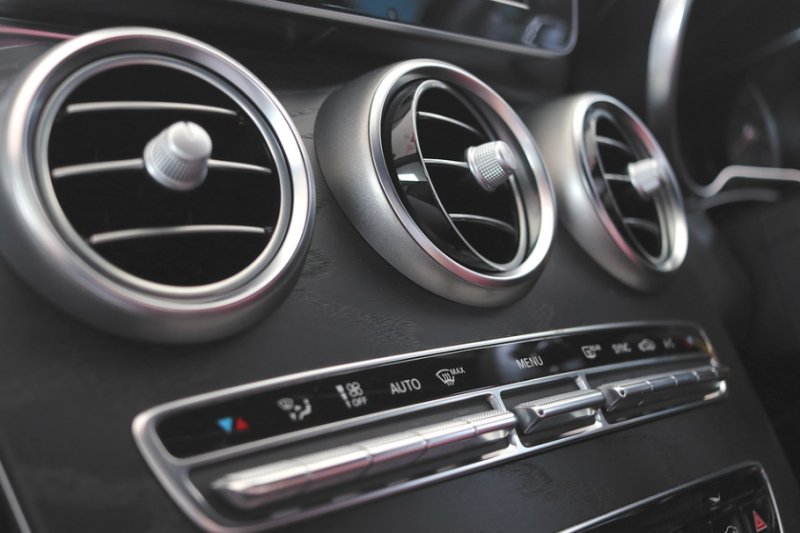
Car AC Not Working? Visit Your Fayetteville VW Dealer

When the temperature outside begins to rise, most of us head straight for the car AC button. But what do you do when you find your car AC not working? The best thing to do is to simply visit your local VW dealer for expert help. The dealer can help determine the cause of the problem and recommend a course of action. Here are some of the things you can expect when you take your VW in for a diagnosis. Car AC Not Working? Visit Your Fayetteville VW Dealer They'll Check If the AC Compressor Is Turning On The air conditioning system in a car has several key components, one of which is the compressor. The compressor's job is to pressurize the refrigerant and circulate it throughout the system. If the compressor is not working properly, the AC will not be able to do its job. That's why, when you take your car to a mechanic with AC problems, one of the first things they will do is check to see if the compressor is turning on. If the compressor is not running at all, it will most likely need to be replaced. However, if it is running but not working properly, there are a few other potential issues that could be causing the problem. They'll Check If the AC Is Low on Coolant A car's AC system uses a chemical coolant known as Freon to remove heat from the cabin, keeping passengers comfortable on even the hottest days. If the AC system is low on coolant, it will not be able to properly remove heat from the air, resulting in a warmer cabin. The mechanic will check the coolant level and, if necessary, add more coolant to the system. They'll Check If There's a Leak in the AC System Another thing that your mechanic will check for if your AC is not working is a leak in the system. The most common causes of leaks are faulty hoses, broken seals, or damaged gaskets. These can cause the Freon to escape from the system, making it unable to produce cold air. They'll Check If the AC Condenser Is Clogged The condenser is located in front of the car's radiator and works by cooling the refrigerant that is being pumped through the AC system. If the condenser is clogged, it can cause the refrigerant to overheat and cause the AC system to fail. There are a few reasons why the condenser may become clogged, such as debris blocking the airflow, or a build-up of ice on the condenser coils. If your Volkswagen's AC isn't working, don't wait. Bring it in to our dealership at Crain Volkswagen of Fayetteville for service and maintenance. We have a team of experts who can get your AC system working again.   Image via Pixabay.com by ninofficialphotopraphy

oil-3979023_960_720

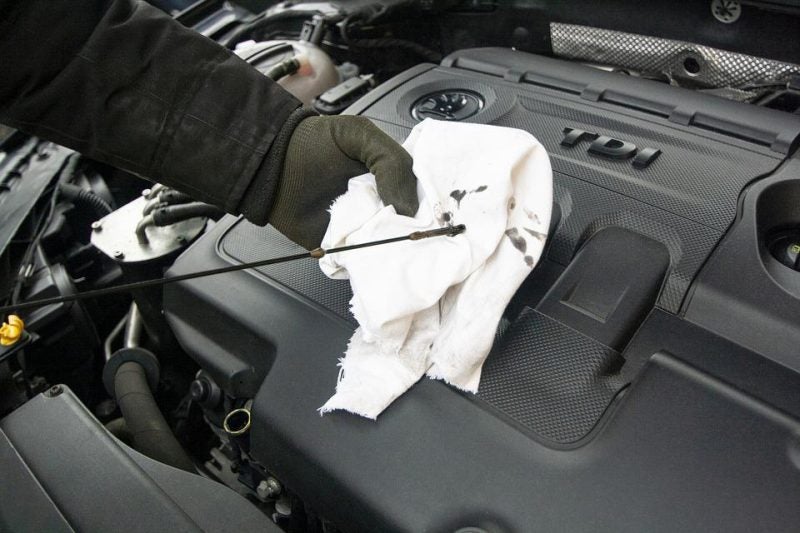
5 Car Maintenance Tips to Keep Your VW in Great Shape for Years

Keeping your VW in great running shape is a top priority for most drivers. Thankfully, there are some simple, but essential, things that you can do to help keep your car happy and healthy for many years to come! We've assembled this quick list of our top 5 car maintenance tips for drivers looking to stay ahead of the curve and keep their VW running smoothly. Advice From a VW Dealer: 5 Car Maintenance Tips To Keep Your VW in Great Shape for Years 1. Check and Change Your Fluids There are a number of vital fluids that keep your vehicle's internal systems working regularly and safely, including brake, transmission, and power steering fluid. It's important to get these checked regularly (about every 5,000 miles or so) to ensure they're fresh and working as necessary. Getting these checked at your local dealership means they can also replace them for you if the mechanic notices it's time for new fluids in your VW! 2. Change the Oil Regularly You've probably heard it said that engine oil is the lifeblood of your vehicle, and it's true! Regularly checking your oil and keeping up to date with your scheduled oil changes is an essential step in keeping your car in great working condition for the years to come. Your VW dealer will be able to let you know how frequently you should be changing your oil to ensure your engine keeps running smoothly. 3. Replace Your Engine Air Filter Your vehicle's engine air filter is an essential component that keeps dirt, debris, and other unwanted materials out of your vehicle's engine, so it's important to make sure it's clean and functioning well. If your engine air filter wears out and stops working as intended, it can allow particles and debris into your engine that can cause serious damage to your vehicle's internal systems. Stay ahead of that problem and replace your engine air filter when it starts to wear out! 4. Keep Your Car Clean Your car keeps you dry and clean in all kinds of weather and road conditions, and it's important that you do the same for it, too! While a little dirt on your car isn't inherently a big deal, a build-up of dirt and grime can start to wear out parts of your vehicle's body and undercarriage over time. Depending on the climate you drive in, winter road salt may also be a damaging element building up on your car. A quick, regular cleaning will help limit this and keep your car in great shape. 5. Get an Annual Inspection In general, probably the best thing you can do for your VW's long-term health is get it looked at by professionals on a regular basis! Most people recommend an annual inspection to ensure your vehicle is safe and that there are no components that are wearing out and creating a risk of more serious damage to other parts of the car. Whether it's an oil change, an inspection, or anything else your VW needs, we've got you covered! Come on down and visit us at Crain Volkswagen of Fayetteville today for the maintenance your vehicle needs to keep it running safely and smoothly for years.

service_hero_980x327

3 Engine Problems You Should Always Get Fixed at Your VW Dealer

Your VW engine is designed to work effectively and efficiently, but even the best engineering can develop problems over time. Parts can wear or break, and if they do, your VW will develop engine problems. If you're in the area of Fayetteville, AR, your VW dealer can help you. We have the technicians and technology to fix any problem with your engine. These are a few of the problems we can fix. 3 Engine Problems You Should Always Get Fixed at Your VW Dealer Damaged Sensors Since the 1980s, sensors have been attached to all cars. These sensors connect to your car's computer and continually send information from their attached component to the computer. Your VW's computer uses this information to make its decisions. This can become a problem if a sensor is damaged. Damaged sensors will either send no information or send incorrect information to your computer. The oxygen sensor, for example, has a crucial function. It measures the amount of unburnt oxygen in exhaust gases. The correct ratio of air to fuel is 14:1, and your computer uses the information from the oxygen sensor to adjust the air-fuel mix. If this sensor malfunctions, you may use more fuel, or your engine performance will drop. Timing Chain Problems Older engines used a timing belt, but your modern VW engine uses a timing chain. The timing chain synchronizes the movement of the camshaft and the crankshaft. By synchronizing the movement of these two components, the valves and pistons will operate just as they are designed to. Timing chains are very robust, but over time you'll see and hear signs that your chain is failing. In time, the chain will stretch slightly, which will cause issues like poor compression and backfiring. If you experience either of these signs, our technicians will check the chain for you. If it's worn or damaged, we can replace it for you. Damaged Alternator The alternator is a mini generator that produces all of your VW's electrical power. The alternator produces power, from the time your engine starts till you shut down your engine. Alternators have a long lifespan, and eight years is an average life for an alternate. As an alternator gets older, it will start to produce less power. As electrical power production drops, your car's electrical systems will start to suffer. Reduced power means your VW's computer will have to decide how to apportion the limited power available. You'll notice electrical glitches, dim headlights, and other signs of reduced power. We can check your alternator, and replace it if it's wearing out. If you experience problems with your engine, call us ASAP at Crain Volkswagen of Fayetteville. Our Volkswagen-trained technicians can fix any problem for you.

vw servie

7 Signs Your Volkswagen Should Get an Engine Diagnostic

If you suspect the engine in your Volkswagen Golf, Jetta, Taos, or Passat is not running at its best and you can't figure out what's causing the problem, an engine diagnostic test from the qualified technicians at your VW dealer will give you all the answers. The test will pinpoint issues accurately, and the technician will perform expert repairs. 7 Signs Your Volkswagen Should Get an Engine Diagnostic at Your VW Dealer 1. The Check Engine Light Is On We know you've heard all about the check engine light before, but it's crucial never to ignore it when you notice the light is on. The light warns you when there is a problem with the engine, and the faster you get it checked out, the less damage will be caused. When the check engine light is on, bring your car to us. A qualified Volkswagen technician will perform a diagnostic test to accurately determine why the check engine light was triggered and perform the required repairs to prevent further damage. 2. Your Car Guzzles Gas With today's sky-high fuel prices, the last thing you need is for your car to guzzle gas. When you suddenly have to fill up more than usual, even if you don't put more miles on the clock, there's a problem that needs urgent attention. Many issues will cause your car to burn more gas and to find out what is causing it, bring your vehicle to us for a diagnostic test so that one of our skilled technicians can sort out your gas woes once and for all. 3. Your Car Is Slow and Lazy A long list of vehicle problems will cause your car to feel slow and lazy when you step on the accelerator. It could be a faulty fuel pump, a clogged air filter, a bad air filter, a sensor problem, or a load of other issues. A diagnostic test will quickly determine the cause of your car's loss of power. 4. Your Car Idles Roughly When the engine is not purring and idles roughly, many problems could be the cause. It could be dirty fuel injectors, clogged air filters, exhaust system problems, faulty fuel pumps, and bad spark plugs. Get rid of the guesswork with a diagnostic test. 5. You Hear Strange Noises When there is a problem with your car's engine, you will hear all sorts of strange noises. Worn, damaged, and broken parts can make terrible sounds under the hood. We will quickly find out the cause with a diagnostic test and fix the issue to avoid further damage. 6. You Smell Bad Odors Fumes inside your car are dangerous and unhealthy. When you get a whiff of something terrible, such as gas or exhaust fumes, especially inside the cabin, it's a warning that there is a problem. Bring your car to us ASAP for a diagnostic test. 7. You See Smoke From Under the Hood or Tailpipe Something is getting too hot when you see smoke pouring out from under the hood or the tailpipe. Smoke is always a reason for concern and must be checked out as soon as possible. Bring your Volkswagen to us for a diagnostic test, and we will quickly find the problem. When it comes to car troubles, make your life easy by getting rid of the guesswork with a diagnostic test. Drop by Crain Volkswagen of Fayetteville today for a diagnostic test performed by highly skilled Volkswagen technicians, and we will take care of your engine problems fast.

1fbeba54-59bd-4449-b3e6-3218cf51a6c5

3 Signs Your VW Needs Transmission Service

Your VW transmission is composed of hundreds of moving parts, many of which depend on friction to work effectively. Add to this a high temperature caused by the constant motion of these parts, and this explains why your transmission needs regular maintenance to keep it working perfectly. As your VW dealer, we'd like you to know some of the signs that you need to come in for a transmission service. 3 Signs You Need a Transmission Service at Your VW Dealer Noises in Neutral When your transmission is operating correctly, your gears will shift smoothly and silently. If you suspect that you have a transmission problem, you can test this by shifting your transmission into neutral and listening. When your engine is running but your transmission is in neutral, there should be no sounds as your car isn't in gear. If you hear sounds, the most likely cause is a problem with the torque converter. The torque converter is the section of the transmission that connects to your engine. It uses fluid to transfer the power of your engine to the gears in the transmission that will allow your car to move. Our technicians will check the converter, and fix the problem. Burning Smells No one likes the smell of burning, particularly if it's coming from your car. If the smell is similar to burning rubber, there's likely a problem with your transmission fluid. Transmission fluid serves several purposes, to control the heat in the transmission, to prevent friction between the various moving parts, and to provide hydraulic power to move the gears. Transmission fluid is changed according to a fixed schedule outlined in your car manual. The reason for changing the fluid is that older fluid becomes less able to fulfill the demands on it. It also loses its heat-resistant properties. Old transmission fluid can overheat in the transmission and start to burn. Burning transmission fluid smells like burning rubber, and it's a sign that our technicians need to check your transmission. Transmission Fluid Leak Transmission fluid is essential for your transmission to operate. Without it, the gears won't have the power to shift on-demand, and the various components will suffer friction damage. Your transmission will also rapidly overheat without it. These factors make it essential to repair a transmission leak right away. Transmission fluid is normally bright or dark red, which helps to make a leak easier to spot. If you suspect that you have a fluid leak, you can test for this by placing a large piece of clean cardboard underneath your car overnight. You can further test this by starting the engine but leaving the transmission in park. Finally, keep your foot on the brake and shift into drive. If there is any fluid on the cardboard after any of these tests, note when the leak started and call our service department right away. If you have any transmission problems, our highly-trained technicians can repair them for you. Call our service department at Crain Volkswagen of Fayetteville.

collision

How to Get a Quality Collision Repair for Your VW

Collisions are frightening as well as frustrating regardless of size, the last thing you want to deal with is a damaged car. Your Volkswagen dealer understands that and wants to ensure convenience and satisfaction, here's the best way to get a quality collision repair for your VW. How to Get a Quality Collision Repair for Your VW Schedule a Repair With your Volkswagen Dealer After your collision you may receive a call inquiring about repairs, this means your insurance has passed along your information to a collision center for your vehicle to be repaired. If you do not get a call, don't worry. You can easily get free estimates or schedule repairs and towing, if needed, on our website or over the phone at your convenience. Inspection Once the day of your repair comes our dedicated team will assess the damages with a full walk around. Whether serious collision damage or minor abrasions our certified technicians have not only the tools but the training and experience to reconstruct your damaged vehicle to its pre-collision state! After completion of the inspection, we check your car in for further processing and repairs. Rental cars are available for any customer that needs an alternate vehicle to drive until the completion of repairs. Disassembly This stage is when the degree of damage is truly assessed and necessary repairs are determined. A blueprint of repairs will be created to get your car finished as soon as possible. Customer Notification This is when you get a notification of the extent of damages, the timeframe of the repairs, and any questions you may have can be answered by our friendly, qualified technicians. Throughout your repair, you will notice the technicians are dedicated to providing the most time-efficient, customer satisfactory process possible. Repair During this process, repairs laid out in the blueprint will be executed. Technicians will use tools such as electromagnetic measuring systems that restore your car to its factory specifications and ensure that it is structurally sound. These structure repairs happen at the same time as any mechanical repairs. Reassembly Nearing the end of the repair process the inspection of all car systems is carried out, and all details and final touches are added to your vehicle. Everything that was removed from your vehicle will be reinstalled. Final Inspection All surfaces are cleaned and the body of the vehicle will be polished. The interior of the car will be intricately cleaned and the car will be thoroughly inspected. Finally, your vehicle will be test-driven to ensure that the driving quality of your car is not negatively affected by repairs. Delivery Once your car passes inspection, the repair process commences. A delivery person will drop your vehicle off in a place that conveniences you or you can come and pick it up. Your time is valuable, and our repair process ensures that it's well preserved during such a stressful time. To be truly satisfied be sure to contact us at Crain Volkswagen of Fayetteville for all of your service needs, or to purchase a new or preowned vehicle!

Screenshot 2022-05-27 130845

4 Best Fuel-Efficient Volkswagen Vehicles

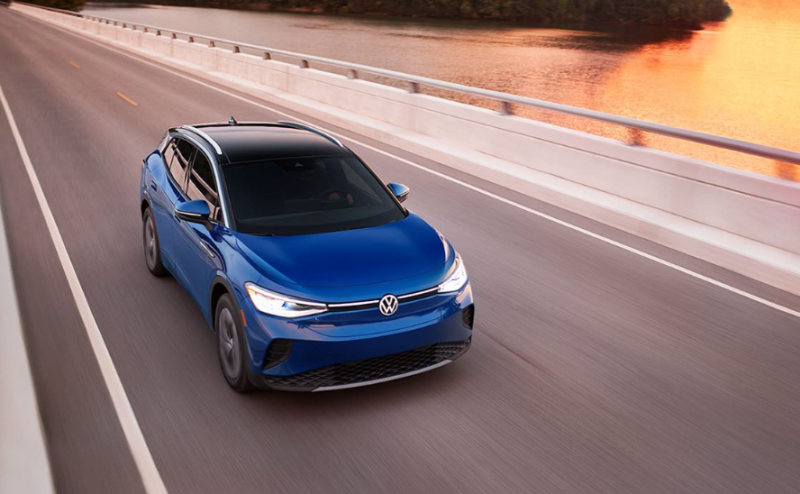
If you put a lot of miles on for your daily commute, you may want to look at finding a fuel-efficient Volkswagen to save some cash. Even if you don't drive a lot, you may still enjoy saving money by purchasing a Volkswagen with better fuel economy. Whatever your reason, here are the four best fuel-efficient Volkswagen vehicles. Volkswagen ID.4 For those who want to increase their gas mileage significantly, an all-electric vehicle such as the 2021 Volkswagen ID.4 is an excellent choice. In the ID.4, you can expect to get 104 MPGe in the city and 89 MPGe on the highway in both the 1st Edition and Pro S, while those numbers hit 107 and 91 in the Pro. In addition to amazing fuel economy, the ID.4 comes with keyless entry, power-adjustable front seats, heated front seats, and a leather-wrapped heated steering wheel. You'll enjoy the 10-inch touch screen that features Apple CarPlay and Android Auto with voice controls, a Wi-Fi hot spot, and wireless smartphone charging. As you move up past the Pro trim, available features include a panoramic sunroof, a hands-free power tailgate, simulated leather upholstery, and a 12-inch touch screen with gesture control. Volkswagen Golf The 2021 Volkswagen Golf is available in a single trim. The TSI has a turbocharged 1.4-liter four-cylinder engine that produces 147 horsepower. This engine is paired with either a six-speed manual or eight-speed automatic transmission. You get 29 mpg in the city and 39 on the highway with the manual transmission, while the automatic gets you 29 city and 36 highway. Features include a panoramic sunroof, keyless entry with push-button start, simulated leather seats, heated front seats, and a 6.5-inch touch screen with Apple CarPlay and Android Auto. Volkswagen Golf GTI You can get the 2021 Volkswagen Golf GTI in three trims: S, SE, and Autobahn. Each comes with a turbocharged 2.0-liter four-cylinder engine for 228 horsepower. A six-speed manual transmission is standard, but a seven-speed automatic is available. On the GTI, the automatic is the more fuel-efficient, offering 24 mpg in the city and 32 mpg on the highway, while the manual gets 23 and 30. Standard features include heated front seats and a 6.5-inch touch screen with Apple CarPlay and Android Auto. Moving up through the trims adds a panoramic sunroof, leather seating, and an 8-inch touch screen. Volkswagen Jetta Another fuel-efficient vehicle from Volkswagen is the 2021 Jetta, powered by a turbocharged 1.4-liter four-cylinder engine that produces 147 horsepower. The S and R-Line trims have a standard six-speed manual transmission, while the others have an eight-speed automatic. Trim levels are S, SE, R-Line, SEL, and SEL Premium. Gas mileage on the manual is 30 mpg in the city and 41 mpg on the highway. Compare that to 29 mpg in the city and 39 mpg on the highway with the automatic transmission. Features include a rearview camera, power-adjustable side mirror, two USB ports, Bluetooth connectivity, and a 6.5-inch touch screen with Apple CarPlay and Android Auto. Other trims offer upgraded features. When you're ready to check out one of these fuel-efficient Volkswagen vehicles, stop at Crain Volkswagen of Fayetteville, where they'd be happy to get you set up for a test drive.

vw warranty

What's Included in a VW Car Warranty?

The warranty that is offered by the manufacturer can be easy to overlook when taking test drives and talking about financing. However, when shopping around, or even after the purchase, it's important to understand the finer details of the warranty coverage that comes with your vehicle. In this article, we will take a look at the car warranty available at your Volkswagen dealer. What's Included in a Car Warranty From Your Volkswagen Dealer VW offers a basic warranty with all new car purchases that is similar to the bumper-to-bumper warranty that is industry standard. However, this new VW warranty is not broken into a bumper-to-bumper warranty and a powertrain warranty. Along with this warranty, VW offers an anti-perforation warranty, 24/7 roadside assistance, as well as a no-cost scheduled maintenance plan. These coverages and more make the coverage offered on new vehicles by Volkswagen to be some of the best in the industry. The New VW Warranty The new VW warranty offered as part of a suite of services VW calls Carefree Coverage, is valid for 4 years or 50,000 miles, whichever occurs first. This warranty covers all costs of repairing or replacing components that have malfunctioned due to defective parts or faulty workmanship that has occurred at the factory. This warranty covers most components of the car including high-tech electrical components, the infotainment center, and all mechanical components. This warranty provides peace of mind that you won't have to worry about a large repair bill in the first few years of ownership. This Warranty does not cover parts that wear out due to normal use. This includes parts like tires, spark plugs, oil filters, windshield wiper blades, light bulbs, and other components. In addition, this warranty is transferable during the specified period. Repairs made necessary due to improper maintenance or damage are excluded from coverage. The Certified Pre-Owned Warranty All VW vehicles that meet the certified pre-owned criteria come with additional coverage that is valid for one year or 12,000 miles. With this additional coverage, a certified pre-owned Volkswagen will have 5 years of warranty coverage. This warranty functions as an extension of the new vehicle warranty and will have the same terms and exclusions. Additional Coverage In addition to the standard manufacturer warranty, VW offers some additional warranty coverage for new vehicles. The Anti-Corrosion Warranty covers rust to the metal that occurs from the inside out. This warranty is valid for 12 years and has unlimited mileage. Rust that occurs due to improper maintenance or damage, or that occurs from the inside out, is excluded from coverage. VW offers 3 different tiers of extended warranty coverage called the Drive Easy Service Protection Plan. These plans vary in the range of coverage and deductibles that may apply. This program is available for a term of up to 10 years or 150,000 miles. If you are in the market for a new car, VW has some of the most attractive warranty options in the industry. If you want to learn more about the warranty options, or if you are ready to find that perfect new VW, come see us at Crain Volkswagen of Fayetteville.

Contact Us

Fill out this form below and we'll contact you shortly
*Required Fields